Showing posts with label Patricia Smiley. Show all posts

Thursday, March 19, 2015

The Agony and the Ecstasy: Selling my first novel

Patricia Smiley

Ah, I remember it well. It was July 19, 2002. I was on my sailboat in Isthmus Cove, Santa Catalina Island when I got a call from my agent, telling me that he had hammered out contract details with Mysterious Press to buy my first novel, and I was soon to be a published author. I celebrated with a bottle of 2000 Beaulieu Vineyard Chardonnay, which nonetheless tasted like Dom Perignon. I pasted the label in a scrapbook that I was sure would make it into the archives of the Smithsonian one day.

If that story seems too warm and fuzzy, let’s flash back a couple of years to when my twisty publishing journey began. When I started searching for an agent, a friend graciously referred me to her agent at William Morris. He flat out refused to even look at my manuscript, but told her he had an assistant who was just building her list of authors and might agree to read it. She did agree and loved it. Easy, right? Hardly. There had been rejections before that, some of them rather hilarious. I know because I saved all the letters (We wrote letters back in the day; no agent accepted email queries.).

My newly minted agent had just started sending the manuscript of FALSE PROFITS to editors when September 11, 2001 happened. Everything in New York shut down and nobody knew when or if the publishing industry would recover. Two weeks later, my agent called to tell me she was leaving New York and agenting. While I understood her decision, it left me to restart the agent search. Eventually, I signed with another agent who sold the book to Mysterious Press/Warner Books. Before the deal was done, I spoke on the phone with my new editor. She was a bit snarky with me, which was not only surprising but mildly disconcerting. It wasn’t until later that I would surmise why she had reacted that way.

The actual contract didn’t arrive until mid-December 2002, five months after we agreed on the contract terms. Meanwhile, I waited for the editorial letter, outlining what changes I’d have to make. September arrived and still I’d heard nothing from my editor. I began to worry. Soon after, my agent discovered quite by happenstance, that my editor was no longer there. She had left without telling me, which suggested she was already on her way out the door when she bought my book. I was assigned editor #2. It was now 2003. I finally received an editorial letter and was working on revisions, when in June 2003 I learned that editor #2 had died. I was assigned editor #3.

FALSE PROFITS was released just before Thanksgiving 2004. I was indeed thankful, but by that time it had been almost two and a half years since Mysterious Press had bought the manuscript and five years since I’d signed with my first agent.


Hello, Smithsonian? It’s Patty. I’m still writing. Can we talk?

Sunday, March 15, 2015

Finding a literary agent the second time around

Patty here

A few months back, I parted ways with my long-time agent. I hadn’t written anything in a while and the new novel I’d just finished—a police procedural based on my 15-years of volunteer service for the LAPD—was a departure from the four books in my Tucker series. There was no drama. My agent and I just realized it was time for each of us to move on. Still, breaking up is hard to do, especially when I didn’t know if I could find somebody else. A friend tried to reassure me. She’d recently had a conversation with an editor who said agents were desperate to find new clients because so many of their old clients were self-publishing. I took that information with a grain of salt.

Initially, I targeted four agents who were my dream team. One of them I considered out of my reach, but since my dad had always taught me it was just as easy to dream big as it was to dream small, I queried her anyway.

Five months and counting and none of those four has responded. 

That surprised me. On my first foray into the agent search in 2001, every agent I queried (by snail-mail back then) wrote back. I saved all the letters because some of them were hilarious. Many were dictated-but-not-read form letters. However, some of the biggest agents sent personal, typewritten notes with real signatures, saying no in various polite ways:

“I can’t take on any new projects at the moment.” 

“As you know, this is a subjective business and I could be wrong.” 

Some merely jotted a personal not-for-me note on my query letter and returned it in the self addressed stamped envelope.

This time around, all submissions were transmitted by email. Two of the agents sent automated responses, acknowledging receipt of my submission. Of the agents who used that method, both said it would take them from six to eight weeks to respond. One agent stated if I didn’t hear from her after six weeks, I could assume she wasn’t interested. That was not encouraging but I appreciated her honesty. The other submissions simply disappeared into the ether.

Of course, I didn’t sit around waiting for those agents to call. I kept sending queries, ten in total, three of them because of author friends who had volunteered to contact their agents on my behalf. All three had read my book and loved it. Based on my friends' recommendations, each of their agents agreed to read my manuscript. Each took about two months to respond. Two said no thanks. One loved my book and offered representation.

I realize this is a somewhat small sample from which to draw conclusions, but here they are nonetheless:
  1. Finding an agent is still difficult
  2. Agents don’t seem desperate for clients
  3. Having a friend recommend you to his/her agent is no guarantee of success
  4. The search is still long and frustrating
  5. Having a track record in publishing doesn’t necessarily mean anything
  6. Not responding to queries is a crappy business model, especially when busy agents could set up an automated email response that advises writers about the process
  7. It only takes one agent who loves your book
I feel extremely lucky to have found that one agent. Let the fun begin.

HAPPY MONDAY!

Monday, February 16, 2015

50 Shades of Grey: violent sex or kinky fairy tale love story

Patty here

Consider me Switzerland. I haven’t read the E.L. James 50 Shades of Grey trilogy and until this weekend, I had only the sketchiest idea of what the books were about. Somehow the words “mommy porn” and atrocious writing that have been used to describe the books were a deal breaker for me. But the studio’s marketing campaign for the film—Curious?—worked. I was curious. So, when the opportunity arose to see the movie at a screening, I went. I did not expect to like the film, but I did like it, mainly because of Dakota Johnson and Jamie Dornan, and I found myself routing for them.

Um...yes.

Everyone has varied opinions about this film. Mostly negative. Here’s Dave Barry's funny essay about the book. Some of the other criticisms:

It was the worst movie ever made: These people have obviously never seen Anaconda. It may not have been the best movie I've ever seen, but it was far from the worst.

Jon Voight inside the belly of a snake. Need I say more?


Bad acting: I found Dakota Johnson to be charming, funny and authentic as the college student who, because of a twist of fate, meets her kinky Prince Charming. The first part of the film rolled out as a romantic comedy. The audience laughed in all the right places. 

Some fans of the books objected to Jamie Dornan as Christian Grey. One person said Dornan didn’t display the depth of emotions that Grey had in the books. As introduced in the film, Grey is a man who is wounded by his past, which keeps him from having “normal” relationships with women. He is guarded and emotionally unavailable. Dornan’s performance was subtle, but I felt his inner pain and conflict.


There was no chemistry between the characters: Switzerland disagrees. There was chemistry. Casting characters from books that have a 100-million fan base must be a challenge. Some fans will be happy. Some—not so much. I’d never seen Johnson act before, but she was perfect for the part of Ana. I’d recently watched and loved Dornan’s sexy performance in the wonderful BBC series The Fall, with Gillian Anderson. I also enjoyed his performance in 50, but let’s face it, I could be happy watching Dornan watching wheat grow.


Misrepresents BDSM (bondage, discipline, sado-masochism): I can’t evaluate this criticism, because I’m not part of the community and don’t know anybody who is, but the movie has raised my awareness. From what I’ve read, this practice involves erotic sex between two consenting adults. It should be pleasurable and fun. If you’re not laughing, you’re doing it wrong. Ana isn’t exactly yucking it up when Christian sweeps the tip of a whip over her body but she seems to be enjoying it. Good thing she’s not ticklish.

The film promotes violence against women: This is the criticism I find the most difficult to understand, especially since there are so many serial killer books and films that show or describe in nauseating detail the torture, rape, murder and dismemberment of women. Occasionally, I’ll read that a violent video game or a book inspired murder, but I haven’t noticed an uptick in crimes against women by readers of the 50 Shades trilogy. The books have been out for a while. One hundred million copies have been sold. If these books inspired that sort of violence, wouldn’t we have heard about it? I suppose one could argue that films reach a wider audience, but I still don’t buy the argument.

The bottom line: The film features erotic sex between consulting adults. Maybe it’s not my cup of tea, but the agreement between Ana and Christian was clear and it was written. Either could say stop at any time and that request would be honored. And it was. Some people argue that young women might engage in S&M with people they don’t know well enough to trust. Come on. Give women some credit. We’re not a bunch mindless nincompoops. Ana may have been inexperienced sexually but she was a college graduate who knew how to set boundaries. She wasn’t a pushover. She negotiated with Grey to alter the terms of his contract. And she was free to walk away at any time.

Women and the emotionally wounded men they love and try to save: Christian Grey is a typical character found in story telling. We’ve seen him a million times before, i.e., the strong silent type, so intent on protecting his dark secrets and the wounds from his past that he comes off as wary and sometimes cruel. Heathcliff in Wuthering Heights wasn’t exactly Mr. Nice Guy.


One summer when I was maybe 13-14, I powered through about twenty formulaic romance novels, many set in gloomy manor houses in the English countryside. They were romantic fairy tales and always unfolded with an ingénue who encounters a handsome but brooding man who sends mixed signals about who he is (bad guy or just misunderstood?). In the end, our heroine discovers he’s the love of her life and they end up together.

50 Shades of Grey (the film) is a variation of this fairy tale love story. It taps into a woman’s desire to mend wounded hearts through the shear force of her love. This is what Ana attempts to do. It works to some degree. Grey lets down a few of his guards, giving us hope that she will succeed: he invites her to dinner with his parents, something he’s never done before; he introduces her as his girlfriend, even though he's told her he doesn’t do the “boyfriend thing;” he travels to Savannah and meets her mother. At its core, the film is about a woman who falls in love with a man and tries to make him love her back.

The film pulled in over $80 million over the weekend. An estimated 68% of audience members were women, and 58% were older than 25.


HAPPY MONDAY!

Monday, February 09, 2015

Things to do when you should be writing or important research?

Patty here...

I just reread my 4th novel Cool Cache in preparation for reissuing the eBook with a new cover. It brought back memories of how I created Tucker Sinclair’s world.

Cool Cache

On my first driving trip to Southern California, I remember cresting a hill on Pacific Coast Highway and seeing Malibu beach in all its breathtaking glory. I’ve been in love with the place ever since. In the early years living in Los Angeles, I made many trips there, wandering through the small shops or lunching in the restaurants. Sometimes I just sat on the beach and listened to the waves slamming the shore. It was magical. I wanted to live there. For a time, I worked in an office that overlooked the coastline. Even the occasional mudslide that blocked PCH for hours or days didn’t tarnish my love for the place.

The Bu

So, when I began writing my Tucker Sinclair books I knew she had to live in the “Bu.” The actual house in which she lives is modeled on a home I saw in Oxnard. It was, as I describe in the novels, “a little brown shoebox on the sand.” And it was for sale. It was dwarfed on both sides by mini mansions, so I suspected the buyer would tear it down and build something bigger and grander. It saddened me, thinking about all the memories that would be hauled away in rusty Dumpsters.

I decided the house and all those family memories would live on in Tucker’s house. No photos were taken of the Oxnard house, so I took a field trip to Malibu to scout out a replacement. The pic of the two Adirondack chairs on the beach in the upper left corner of my website was taken on that field trip. The place below was not the same as the Oxnard house but it was similar. The chain-link fencing around the perimeter suggested it was also not long for this world.

Bu-hoo :(

Once the exterior of Tucker's house was set, I moved on to the interior. Thumbing through American’s Best-Selling Home Plans, I found the perfect layout. It even had Tucker's home office just as I'd imagined it and the deck and side entrance featured in all the books.

The architect was reading my mind

Now the house was ready to fill with family memories. I cut out magazine photos of objects that triggered memories and made up stories about them: a bowl of seashells collected by family members over the years,


shee shells by the shee shore

a braided kitchen-rooster rug that belonged to a grandmother Tucker had never known


and a steamer trunk passed down through the generations, filled with camera equipment once owned by Tucker's father who died before she was born.


I have one just like this that belonged to my grandmother

The fake wicker deck furniture, a Tucker purchase, because even plastic degrades in sun and salt air

Those white patches are the result of me prying the pic off the poster board

I also cut out photos of people who reminded me of characters in the book, all of which I glued to a poster board I kept near my computer.

Perhaps some of you are wondering if all this preparation was just an excuse not to write, but, in fact, it helped me create an authentic world for characters with whom I’d be intimately involved for years to come. Tucker's house is more than just a place to live. It represents love, loss and the fragility of family relationships, all themes woven throughout the series.


HAPPY MONDAY!

Monday, January 19, 2015

Why you should attend a writers' conference

Patty here...

Sometimes I think I’ve heard everything there is to know about writing and the publishing business but, of course, I’m always wrong because things change. Mystery fan conventions like Bouchercon or Left Coast Crime are fun, because you get to attend panels, listen to your favorite authors wax poetic, get books signed and mingle in the bar. However, if you’re serious about writing and you want to learn nitty-gritty tips to inspire your process, or learn about the latest trends in the publishing business from editors and agents, you should consider attending a writers’ conference.

The California Crime Writers Conference is a biennial, two-day event that began in 1995 as a one-day conference organized by Sisters in Crime/Los Angeles. In 2007 after years of success, the conference partnered with the Southern California chapter of Mystery Writers of America to become the even bigger and more comprehensive CCWC.

As 2012-2013 president of SinC/LA, I co-chaired CCWC in 2013, which featured keynote speakers Elizabeth George and Sue Grafton. The inspirational keynote speeches given by these two writers were worth the price of admission.

Sue Grafton, Hank Phillippi Ryan, moi, Elizabeth George (photo by Robin Templeton)

But, of course, there was more to discover. Attendees in 2013 chose from a host of workshops in four tracks (Craft, Business, Law Enforcement/Forensics and Nuts and Bolts issues) lead by bestselling authors, law enforcement and forensic experts, plus top agents and editors. The feedback was overwhelmingly positive. One award-winning author told me the conference featured the best law enforcement/forensic track she had ever seen in all her years of attending conferences.

The 2015 CCWC is shaping up to be another winner. This year, I’m co-chairing the Law Enforcement and Forensics track, which will include homicide detectives, an FBI agent and firearms trainer, a forensic entomologist, an expert on serial killers in the medical field, a forensic psychiatrist, among others.


Too often writers collect information about forensics and law enforcement from watching TV and film. Many of those “facts” are fiction. CCWC allows a writer to learn firsthand from experts who will share their knowledge and answer questions about how homicide detectives handle a crime scene, what firearm a character might use and why, how insect activity reveals clues about a death, how a serial killer thinks and how to avoid common mistakes when writing about forensic evidence.

However, the most compelling reason to attend a writers’ conference is for the opportunity to network with fellow attendees. Writing is a solitary pursuit. Writers need to charge those batteries by basking in shared experiences. Whether you’re looking for an agent, a critique group, an independent copy editor or just some conversation with fellow scribblers, think about attending a writers' conference, especially CCWC, since I'll be there to hold your hand. Invest in yourself. Register. Learn. Share. Succeed. You deserve it.

HAPPY MONDAY!

Monday, January 12, 2015

The Real McCoy

Patty here

Last Monday I rambled on about my renewed interest in searching for my roots. At the time, I was on the verge of identifying the country of origin for one branch of my family. Today, I know…at least, I think I do.

My great grandmother was Emaline (Emiline/Emeline) McCoy. She was born in the U.S., but I wanted to know what country her kin came from. Once again, I tapped into research already done by others and traced Emaline’s line back to 1711 in Argyllshire, Scotland where the Highland Clan Campbell ruled the land. Argyllshire is located in western Scotland and includes the Isle of Mull where I spent a delightful few days many years ago.

Trekking on the Isle of Mull in my Lilliputian pink rain jacket

And they also have cool boats

As I searched databases and added names to my family tree, I found a married couple whose names matched my ancestor’s names but who lived a century later. Tilt! Did somebody incorrectly record the dates? Were the duplicate names a coincidence? (I was finding many name repetitions. Seriously, there are other names besides William and James. Get creative, people!) Or was the information I’d originally gathered just plain wrong? This was a mystery I wanted to solve, so I found a site that listed the names from Parishes in Argyllshire during that period. My kin were not listed and therefore the link to me could not be corroborated. I want to believe my McCoys had once lived in Argyll, because I love their socks.


Dig those socks

Then it occurred to me that sorting out conflicting information like this is also a mystery writer’s dilemma (and a journalist’s and a detective’s). “Facts” must be verified. Suspects eliminated. Unfortunately, eye-witness accounts are often unreliable. People forget; they get confused. Sometimes they lie. Sometimes they just write down the wrong dates.

One thing I know for sure is that fictional witnesses should not all be cooperative, spilling their guts for the sake of the plot. The search for truth is messy, frustrating and often emotionally draining. In fiction, this is a good thing, because it creates conflict and as all readers know: no friction, no fiction.

When sending a fictional sleuth to investigate, whether she is a professional or an amateur, it’s important that each witness interviewed has a motive for talking to your hero(ine). Is the witness well-meaning but in his need to be helpful, he pads his story with events that didn’t happen? Is he somebody who doesn’t want to get involved and therefore tells Fictional Investigator that he saw nothing? Or has the emotional shock of a crisis corrupted his memory of events?

Here is an interesting article about the challenge of witness testimony. Or just ask Jim Born:

http://news.sciencemag.org/policy/2014/10/how-reliable-eyewitness-testimony-scientists-weigh 

So, I'm off to verify The Real McCoys of Argyllshire. In the meantime, Write on! Search on!

HAPPY MONDAY!

Monday, January 05, 2015

Unraveling my family history

Patty here

My mother was from a close-knit family of German immigrants who came to the U.S. before 1900 from various German villages in what was then called South Russia but is now Ukraine. Catherine the Great, Czarina of Russia, who was German, invited her fellow country(wo)men to establish villages in Russia's outlying territories. My family heeded the call, with mixed results, I might add. For the most part, I know all the players in my mother’s family, because she and my grandmother passed down stories and a German Bible inscribed with all the births, deaths and marriages.

Kate the Great
Unraveling details of my father’s side of the family is a murkier task. His early life was fractured by a tragedy that separated him from his parents and siblings. He was sixteen when he began to search for information about what had happened, finding some details but not all of them. As an adult, he continued to write letters, search the LDS family library in Salt Lake City, and travel to cities and towns where his family had lived, hoping to find someone who knew them. Some of the data he found was incorrect or could not be verified; some was not what he expected to find. I helped him search, mostly as a way to strengthen our father-daughter bond. After he died, I stopped looking.

Recently, I was cleaning out a closet and came across a box of letters, replying to my dad’s long-ago inquiries. During my prior genealogy search, I had become frustrated by several family names that simply stopped. As diligently as I’d searched, I could not trace them back to the previous generation. One was my great grandmother, Emeline/Emaline/Emiline McCoy. I found her father and her grandfather, who was born in 1796, but nobody prior to that. I wanted to know their country of origin.

Flag of Ireland

I love a good mystery, so I began sorting through the letters. What I found inspired me to resume the search my dad and I had started so many years before. After overcoming some skepticism, I subscribed to Ancestry-dot-com, and found the information available is somewhat overwhelming.

All the names in my dad’s family tree are WASPy, although there may have been a Catholic or two thrown into the mix. Based on the history of the name Smiley, I suspected the family had come from the lowlands of Scotland or Northern Ireland.

Scottish flag
Once I entered the name of my 3-times great grandmother, I tapped into research already done by other people, and found an ancestor who was born in London in 1609 and who immigrated to Plymouth, Massachusetts on either the ship Anne or Little James in 1623, just three years after the Mayflower. My ancestor, Ralph Wallen, owned several pieces of property in Plymouth, including a house and garden at Hob’s Hole and land along the Eel River called “Wallen’s Well.”

Sailing to Plymouth

In the United State Revolutionary War service records, I found another member of that family who served as a seaman in the Navy during the Revolutionary War on a ship called Liberty. I'm a sailor, so I felt a definite kinship with him.

Me in my foulies

I realize some people don’t give a rip where their ancestors came from, but I find it not only fascinating, but also poignant to know that my people tilled the soil of a garden in Plymouth or sailed on a warship called Liberty. And now, thanks to fellow genealogy travelers, I have FINALLY located the next generation in the Emaline McCoy saga and look forward to following it wherever it leads me.

HAPPY MONDAY!

Monday, December 22, 2014

Amazing Disgrace

Patty here

I don’t generally wade into the culture wars, but I am compelled to join those who express profound sympathy to NY and to the families of Officers Liu and Ramos who were assassinated for no other reason than that they wore the uniform of the NYPD. Perhaps those who have painted all law enforcement officers with that broad brush of evil will stop and reflect on what they’ve spawned. They’ve made a dangerous job even more dangerous.

In my 15 years working as a volunteer for the LAPD, I became friends with officers and detectives who represented many communities, including black, white, Hispanic, Asian, Middle Eastern, gay and lesbian. I count them among the finest people I’ve ever known. Now, many in law enforcement feel under siege because too many people have lost their ability to think critically, to look at all sides of the story, to put themselves in somebody else’s shoes and say, “What would I have done in the same circumstances?”

One of my close friends was shot in the line of duty. He was a patrol officer, making a routine traffic stop. When he and his partner ran the license plate, they found that a car with the same number but from a different state had just been used in an armed robbery nearby. Coincidence? They thought not. As they approached the car, without warning the driver pulled a .44-caliber handgun and shot my friend’s partner in the chest. Then he fired at my friend. The bullet hit him in the shoulder and deflected into his neck, where it remains imbedded to this day. Despite being gravely wounded, he survived but not without both physical and emotional scars.

There is nothing that justifies the murder of these two NYPD officers. Nothing. My best hope is that their deaths becomes a teachable moment. Otherwise, I fear for our future.

Monday, December 15, 2014

American Sniper and the role of the sheepdog

Patty here

Earlier this week, I attended a screening of American Sniper, based on the true story of Chris Kyle, a Navy Seal who served four tours of duty in Iraq as a sniper, charged with picking off the enemy to protect marines as they patrolled the streets. The Navy credits him with 160 confirmed “kills” among 225 probable kills, making him the most lethal sniper in American military history. Kyle authored a best-selling book about his experiences titled American Sniper: The Autobiography of the Most Lethal Sniper in U.S. Military History. The film, directed by Clint Eastwood, is based on that book.

Chris Kyle

A bulked up Bradley Cooper, who gained 40 pounds to play Kyle, aced the steely demeanor of a sniper on a mission.


Bradley Cooper as Chris Kyle

The film gave the audience a glimpse into the noise, dust and peril of combat, but, for me, those scenes became repetitive and tedious over time. You may know already how this story ends. I won't tell you here, but the most moving moment for me was the rolling of credits after the film ended. There was no background music, only silence as the names glided by.

Something else in the film caught my attention. An early scene depicted Kyle as a young boy on his first deer-hunting trip with his father, the first time he had stopped a beating heart with a bullet. That experience became a thematic element in the movie.

During the hunt, Kyle’s father shared a theory that the world was made up of sheep (victims), wolves (predators) and sheepdogs (the only thing standing between the two). That episode might have been forgotten had it not been for a video sent to me a couple of days later from a homicide detective friend of mine that referenced the sheep/wolf/dog story.

http://www.youtube.com/watch?v=2zyhOW-8Zcc&sns=em 

Curious to see two references in a short span of time, I searched the Internet for the original text until I found its source: Lt. Colonel Dave Grossman, who wrote On Killing and On Combat. In the video below, he defines each player in the triad.

http://www.policeone.com/police-trainers/videos/6097267-The-sheep-the-wolf-and-the-sheep-dog 

Grossman believes the wolf is a predator with a propensity for violence without empathy. He also believes it takes a predator to hunt a predator. The sheepdog has a propensity for violence but only for a worthy cause. Sheepdogs yearn for righteous battle, which is why Chris Kyle enlisted in the Navy Seals after 9-11. In the film, soldiers who lost their stoic zeal for the mission often lost their lives as a result.

Grossman's philosophy can be applied to writing crime fiction, as well: victims, villains and sometimes less than noble heroes. Thought provoking.

HAPPY MONDAY!

Monday, October 13, 2014

Showering with your cat and other bad ideas

Patty here

BAD IDEA #1: SHOWERING WITH YOUR CAT 

Tigger-boo was my first feline and being an animal lover in general and a zealous new cat guardian in particular, I wanted to do right by him. I brushed him daily and said, “I LOOOOOVE my little pussy cat” in my sexiest Barry White voice because he seemed to like low tones. I bought him expensive toys that he never played with and a deluxe cat bed that he completely shunned, preferring to sleep with my Westie, Dottie (the tart). He was an inside cat and always smelled of hand lotion from being petted excessively.

And then one day I was having a conversation with a cat-expert acquaintance of mine and mentioned that I never bathed the Boo. She looked at me as if I were Fagin in Dickens's novel Oliver Twist. “That’s bad,” she said. “Really bad.”

I’d committed a faux paw without even knowing it. But errors can be corrected, so I began plotting a sudsy afternoon for the Boo. The kitchen sink didn’t seem like a sanitary place to do the deed, so I opted for the shower. After all, it was made of glass so he wouldn't get claustrophobic and enclosed so he couldn’t escape. And I'd be there to cheer him on. What could go wrong? Cat people everywhere already know the answer. I thought I’d need a blood transfusion when it was all over.

Tigger-Boo


BAD IDEA #2: READING AND INTERNALIZING CRITICISM ON THE DAY IT IS RECEIVED

Every writer I know invariably digests negative comments from editorial critiques or reviews while often ignoring positive ones. When I receive critiques on any Work In Progress, I make a practice of listening to the criticism but also writing down every word. Then I put my notebook away and don’t read the comments until the next day. The criticisms are generally more palatable in the bright light of morning and the suggested changes are often more minor than I’d remembered. Plus, there are always encouraging comments I’d failed to hear.

This waiting-until-later tactic is even more essential when you think your manuscript is finished. At this point in the process, many writers stop asking people to read the book because they think it’s perfect. It never is. Attracting an agent and a publisher isn’t easy. If, after several reads by friends, I still have doubts about the manuscript, I send it to others who can and will uncover any additional flaws.

My first book-advance check after polishing the manuscript until it was ready


BAD IDEA #3: MANAGING TWITTER WITHOUT HELP FROM YOUR FRIENDS

When I first opened my Twitter account, I was told by social media mavens to follow everybody who followed me. As you can imagine, doing that produced a lot of messages that didn’t interest me much. And the messages I did want to read were difficult to find in my fast-scrolling news feed.

I had pretty much given up on Twitter until recently when a fellow author with over five thousands followers compared to my measly 180, told me if I wanted to maintain my sanity, I needed to download a free app called TweetDeck that would allow me to sort messages into topics like: Showering With Your Pet or Surviving Criticism or whatever. 

So I downloaded the app and with a little bumbling around, I arranged my Tweets into columns by topic. Then I actually had a conversation with a stranger and was able to follow the thread because those notifications were highlighted in a separate column. My Tweeting life has been saved and I feel damn good about it. Next, I will attempt the death-defying trick of scheduling a Tweet to post when I’m in the shower with my cat. ME-OUUWWWW!

TweetDeck Screen Shot


HAPPY MONDAY!

Monday, September 29, 2014

The Great Escape: How I spent my summer vacay

Patty here

I’ve been off the grid, bare-boat cruising in the San Juan and Gulf Islands off the coast of Washington and British Columbia. Bare-boat cruising means chartering a boat without a professional captain, and that means hopefully somebody onboard knows what they’re doing or you might end up on Gilligan’s Island. There were four people on our 43-foot Ocean Alexander powerboat, Great Escape. Three were experienced boaters (including me), so we were covered. We were traveling on the same itinerary with a flotilla of about 15 boats.

Anacortes, Washington: We picked up our vessel in Anacortes marina. One of my jobs was to jump off the boat dockside and tie the lines to the cleats. But the distance between boat and dock looked like an Olympic event. I wasn’t going to be able to safely jump that distance even with my Air Nike's. Plan B: I found a portable ladder to hang off the side of the boat.

The Vessel Great Escape
 
Hunter Bay, Lopez Island, Washington: The first night we anchored in Hunter Bay, just off Lopez Island in the San Juans. It looks peaceful, but that night we dinghy-ed over to a killer dinner party with 56 of our closest friends. The salmon was flowing and the wine was barbequed to perfection…no, the wine was flowing…oh, nevermind. The details escape me except that the two party boats were MUCH bigger than the one I was on.

Hunter Bay, Lopez Island, Washington: the calm before the party


Friday Harbor on San Juan Island: More eating, drinking and yucking it up.

Friday Harbor Marina


Victoria, B.C.: We cleared Canadian customs in Victoria, B.C. I fought against the notion that I had to show my passport. Canada is a foreign country? What’s that all aboot? Back when I lived in Seattle, my friends and I drove to Vancouver, B.C. all the time. The city had great restaurants, Whistler Mountain ski area and a nightclub called the Cave where I once saw Ike and Tina Turner perform so up-close-and-personal I could almost see the cocaine-induced hole in Ike's nasal septum. Crossing the border was easy back then. You flashed your driver’s license, got a tip of the hat from a border agent and went on your merry way. British Columbia accepted U.S. dollars at the shops (they still do) and Washington State vending machines accepted Canadian coins (kiss that goodbye).

When I first moved to Los Angeles fresh from the Pacific Northwest, I used a Canadian quarter for a purchase in a grocery store.

Clerk: What’s this?
Me: A quarter.
Clerk: I can’t accept this. It’s foreign currency.
Me: What? Canada’s a foreign country?
Clerk: Security!

We were cautioned beforehand that Canada allowed no fresh fruit or vegetables or meat into the country (Really? Even Canadian bacon? Doesn't that have dual citizenship?). Liquor was limited to 2 bottles of wine per person or 1 bottle of hard liquor or a case of beer. I always follow directions (har, har), so before arriving in Victoria, I threw out all contraband food (including four perfectly good wieners) and made a list of everything left in the galley (that’s kitchen for the uninitiated) in my neatest handwriting on a yellow legal pad, in case customs officials interrogated me under a bare light-bulb.

Canadian Customs. That's the phone booth on the left.


After all that hoopla, we almost missed seeing the customs dock, which was about the size of a WASA cracker. And there were no uniformed customs officials in Yukon couture. In fact, there were no customs officials anywhere to be seen, just a telephone and written instructions on how to call for assistance. That was disappointing. I began to regret ditching all those wieners.

Clearing customs was quick and dirty, but I felt a little let down that somebody didn’t board our boat and search the refrigerator. I’d show them my galley list and they’d say, “This is awesome. You must be a writer.”

We had to dodge incoming and outgoing seaplanes.

Look! There's one taking off!


But finally docked in front of the stately Empress Hotel. It was smaller than I remembered from my youth (isn’t everything?) but still stately.

The Empress


That night we ate at an atmospheric and delish Italian restaurant called Il Terrazzo Ristorante on Johnson Street off Waddington Alley (Who can resist eating food off an alley?)

Ganges Harbor, Saltspring Island, British Columbia: I could have spent more time in this boo-tee-ful place. My fellow mariners and I attended a wine and cheese party at the charming Hasting’s House, where I could have stayed for dinner for a around 200 per person (that’s Canadian dollars, people! 223.056 CAD) Instead, I ate at a lovely place called Auntie Pestos, which left me enough scratch (that's hip talk for money) to replace those wieners I ditched.

View of Ganges Harbor from the Hasting's House


Roche Harbor, San Juan Island, Washington: Great Escape left the group the next day in order to get back to Seattle and the flight home. We cleared U.S. customs in Roche Harbor. I was warned I would have to declare our garbage and dump it in a special foreign garbage “burn” container. I tried to jettison the bag in Canada but the marina wanted five bucks (and that’s Canadian bucks, my friends, 5.57640 CAD), so I decided to throw myself on the mercy of U.S. customs. Again. Disappointed. They didn’t even ask about my garbage. And there were foreign peach pits in that bag and half an onion!

Roche Harbor has a general store, a few shops and restaurants, some condos and cottages and oodles of charm. At sundown, marina officials had a flag-lowering ceremony that included a cannon blast and canned renditions of various national anthems (God Save the Queen anyone?). When they lowered the U.S. flag, they played Taps (Can anybody listen to that without choking up?).

Roche Harbor, San Juan Island, Washington


The next day we returned to Anacortes, where no visit would be complete without a breakfast at Dad’s (They smoke their own bacon. Yowza!).

What the sign says...

But all good things must come to an end (Wait a minute. Who came up with that lame cliche? I say, Party on!)


HAPPY TRIP. HAPPY MONDAY.

Monday, September 08, 2014

FanGirl/FanBoy Crushes

Patty here

Is there anyone out there who has never had a FanGirl or FanBoy crush? It’s okay to admit it; you’re among friends. The Urban Dictionary defines FanGirl as:

A rabid breed of human female who is obesessed with either a fictional character or an actor. Similar to the breed of fanboy. Fangirls congregate at anime conventions and livejournal. Have been known to glomp, grope, and tackle when encountering said obesessions.

Hugh Jackman: 'ello.
Fangirl: SQUEEEEEE! *immediately attaches to Jackman's leg*
Jackman: Security! 

I can’t imagine attaching myself to Hugh Jackman’s leg. My FanGirl crushes have been limited to flipping through tabloids at the grocery store checkout counter whenever I see the object of my affection on the cover. But I'll admit that back in his Legends of the Fall days, I thought Brad Pitt was hot.


Then the impossibly adorable Ryan Gosling came along in Lars and the Real Girl. My admiration skyrocketed after I saw him with Michelle Williams at a Q&A following a screening of Blue Valentine. He arrived at the theatre late, wearing blue jeans, a red lumberjack flannel shirt and tousled hair, looking as if he’d just rolled out of bed. He apologized to the audience for inconveniencing us. Very respectful. A hot guy who’s not full of himself? The vibe in the room shifted. FanGirl crushes blossomed everywhere.


Then I saw Thor and had to admit Chris Hemsworth fell into the serious eye candy category. He earned extra points because he had a twinkle in his eye and seemed like a stand-up guy.


But I kept thinking about Hugh Jackman's leg and suspected that my FanGirl cred needed some polish. I searched the source of all inspiration—the Internet—and found a blog post by Beth Thorne, describing her FanGirl crush on Sam Heughan [pronounced HEW-an], one of the actors in the STARZ Outlander series. As suspected, I wasn't putting nearly enough effort into this FanGirl thing.

"There’s a moment in fandom when you realize you’ve effectively lost your mind. For some people, it’s when your Google search bar truncates “Hen…” to “Henry Cavill’s girlfriend” “Henry Cavill’s ugly girlfriend” “Henry Cavill is dating a troll” when you were just searching for cornish hen Thanksgiving recipes. For others, it’s when you wake up drooling on your cell phone because you feel asleep reading fanfic. For some, it’s breaking down a Vanity Fair behind the scenes video for evidence of unrequited cast affection. For me, I’ve known for years that I loved Outlander, and specifically Jamie Fraser. And I’ve known for a few months that I wanted to know more about Sam Heughan. But Sam’s first official public appearance just sealed the fangirl deal."

Okay, so Sam Heughan is adorable, but what makes so many people lust after him? Granted, he's playing a role that has a built-in audience of millions of fans of the Outlander novels written by Diana Gabaldon. But that can't account for all the admiration being heaped on Heughan. What is it that attracts people to movie stars, sports figures and fictional characters? It’s not just physical beauty. There are many good-looking people in the world. In interviews, Heughan comes across as sweet and just a bit proper, maybe even shy. That persona might be an act cultivated by his publicist, but I don't think so. I think he has that certain something that sets him apart from the crowd.


Defining "that certain something" is an important exercise for writers. We all love our characters—even the bad ones—and translating FanGirl/FanBoy feelings onto the page adds complexity and authenticity to our writing. The why of our attraction to certain personality types—bad boys/girls (dangerous), adventurers (fun loving) or artists (emotionally complex and sensitive)—elevates our characters from caricatures to flesh and blood people. In the end, it isn't how they look that makes us love them; it's what they say and do, on the page or in the flesh, that provides a window to the soul and our enduring admiration.

Here's an informal survey: Sophia Vergara, Scarlett Johansson, Sean Connery, Tom Brady or Mr. Darcy. Who do you think has "that certain something," that je ne sais quoi? I'm making a list because Hugh Jackman's leg has already been taken. And all you authors out there—did you pattern your characters after people you know and love?

Note to our email subscribers, just email back with your FanCrush and I'll include it in the comments section.

HAPPY MONDAY!

Monday, August 11, 2014

OUTLANDER: When books come to life on screen

Patty here

Has anyone seen the first episode of Outlander on Starz? For now, you can get it for free by visiting Starz.com. I watched on my computer but it’s also available On Demand if you have Time Warner Cable or similar.

I always cringe when a movie or TV series is made from a favorite book. We’ve all seen unsuccessful attempts and worry: Will the action be true to the book? Will the actors resemble the people we’ve imagined?

The official poster

A friend recommended OUTLANDER shortly after it was published in 1991. Her description sounded genre bending and not at all appealing, but she insisted I read it. So I did. And I loved it. I have since read all of the books in Diana Gabaldon’s series, except for WRITTEN IN MY OWN HEART’S BLOOD, which was released in June. The author has an interesting history. She holds degrees in Zoology, Marine Biology, and a Ph.D. in Quantitative Behavioral Ecology. She wrote OUTLANDER in secret, just to see if she was capable of writing a novel.

The books are part time-travel, part historical novel, part steamy romance and totally engaging. The history fascinated me because I have Scottish kin on my father’s side and I loved reading about that period in history. I’ve also traveled in the highlands of Scotland and found it enchanting.

As for OUTLANDER, the casting is inspired. Claire and Jamie look mostly as I imagined them. As Claire, Caitriona (pronounced Katrina) Balfe’s acting chops seem up to the task. She reminds me a bit of Cate Blanchett.  

Caitriona Balfe as Claire

Sam Heughan is Jamie Fraser.


Sam Heughan as Jamie Fraser

Production-wise, I thought there was an over reliance on voice overs and the pace was—shall we say—leisurely, but seeing it made me want to reread the book.

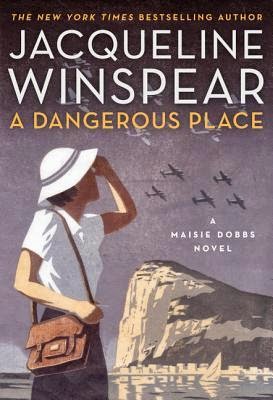
Most authors wonder who would be cast to play the characters in their novels. Who would make a good Maisie Dobbs? Jake Lassiter? Tom Eriksen in BORDER WARS? A friend once told me she envisioned Hilary Swank as Tucker Sinclair. I was surprised but later thought her observation was spot on.


For the uninitiated, OUTLANDER begins at the end of WWII. Claire Randall has spent the war years working as a combat nurse where she has become accustomed to making life-and-death decisions. In other words: She's no wimp. Now that the war is over, she and her husband Frank travel to Scotland on a second honeymoon to get reacquainted after years spent apart. During their stay, Claire visits a group of standing stones.


Stonehenge

While there, she touches the rocks and is transported back to 1743 Scotland in the midst of the Jacobite rebellion against English rule. And that’s when the real fun begins.

With the positive buzz, including a good review in the Los Angeles Times, the STARZ series seems headed for a successful run. I'm glad the OUTLANDER powers-that-be got it right. Congratulations to all involved.

HAPPY MONDAY!

Monday, July 28, 2014

The most dreaded word in a writer's vocabulary: rejection

Patty here…

Is there anyone out there who has ever felt as if they were a terrible writer and a worthless human being because the responses to your agent query letters are coming back addressed to Dear Author or Dear Sir or Madam and all say something like:

  • I’m not taking on any new clients at the moment.
  • In this difficult publishing climate, we feel that we would not be able to place your work successfully.
  • No, just no.  

“Rejections slips, or form letters, however tactfully phrased, are lacerations of the soul, if not quite inventions of the devil – but there is no way around them.” – Isaac Asimov 


I saved all of my agent rejection letters. Some of them were quite amusing although I doubt the agent intended them to be. A couple were addressed to me and signed with real ink (very classy). Most were impersonal form letters. One was a 1/3-page barely readable form letter that looked as if it had been copied a thousand times and then ripped from the mother page with a dull ruler.

If you are lucky enough to snag an agent, you must face the next round of rejections—from editors. Famous authors are not immune:

“I got a rejection letter from an editor at HarperCollins, who included a report from his professional reader. This report shredded my first-born novel, laughed at my phrasing, twirled my lacy pretensions around and gobbed into the seething mosh pit of my stolen clichés. As I read the report, the world became very quiet and stopped rotating. What poisoned me was the fact that the report’s criticisms were all absolutely true. The sound of my landlady digging in the garden got the world moving again. I slipped the letter into the trash…knowing I’d remember every word.” – David Mitchell 


Writers must develop a thick, protective skin in order to survive the onslaught of criticism. How should writers handle rejection? In my quest to find answers, I asked Bonnie MacBird, a multi-Emmy award-winning writer/producer, actor, artist, and author of the Sherlock Holmes adventure, Art in the Blood. Bonnie also teaches screenwriting at UCLA Extension Writers’ Program. I wanted to know what advice she gives her students.

"Rejection, hmmm. I know something about that. I'm an actor as well as a writer. A three-part sketch I once wrote for a show called HOT ROLES told of a young actor who fantasizes about an upcoming important audition. First he imagines the audition from hell -- he's got the wrong sides, then he's misunderstood, belittled, and finally thrown out of the room in a fury by the director. So he gives himself a pep talk, and re-imagines the audition, this time he kills it, and lands a star-making role. Snapping out of it, he realizes it's time to actually go to the audition. He arrives at the real thing. Waits. Waits some more. They call his name. He reads. Silence. Thank you very much. No feedback. We'll call you. In other words…nothing.
Alas, that's how rejection mostly is, nowadays. Impersonal. Nothing useful imparted. At best, as a writer you may receive a one line email. You can't even wallpaper your walls with this kind of thing. To be fair, I understand what readers face. I spent four years on the other side of the desk as a feature film development exec at Universal. I read six scripts a day, novels, plays… and twelve to fourteen pieces of material every weekend. And covered theatre. During this time, I wrote over a thousand reports, and hundreds of direct responses to agents and writers, never forgetting for an instant how much work went into each script or book.
As a writer, I hope for the same, but rarely get it. Back then, Universal had big bucks and hired Ivies with strong work ethics to read, and mentored us with experienced story wizards. But as a Disney exec once said when reneging on a promise, “that was then and this is now.”
Publishing companies nowadays have fewer dollars and fewer people. I'm guessing the stacks on the desks are higher. And…frankly… it's harder for young people used to googling, texting and surfing to really read a whole book now. But they are in the business of words, so this excuse only goes so far.
So, when I'm rejected, here's what I do. If there is a smidgeon of information I take it to heart, but only in the aggregate. If one person says the ending doesn't work, and four people (and you) know the twist is killer, don't listen to the first guy. Learn to be discerning in how you take criticism. But be open to it. Develop some armor. Beyond that, press on. My main tactic is to be already on to the next project. That, and chocolate. And a good run. Fuck 'em. I am in good company, and at least my work is out there, being considered. That's a win for me."


Craig Faustus Buck, an L.A.-based journalist, NYT bestselling nonfiction book author, TV writer-producer, Oscar-nominated screenwriter, Anthony Award nominated short-story writer and novelist says:

“Gloom is a writer's best friend as far as rejection is concerned. If you expect to be rejected, you'll never be disappointed. And when you're wrong, it's an orgasmic surprise. Rosy expectations will turn a perfectly normal rejection into a personal tragedy.” 

Here's Chuck Wendig’s tough-love take on rejection. Wendig is a novelist, screenwriter, and game designer who writes a blog called TerribleMinds. Read his entire post on rejection here:

“If you’re a writer, a writer who writes, a writer who puts her work out there, you’re going to face rejection. It’s like saying, “Eventually you’re going to have to fistfight a bear,” except here it’s not one bear but a countless parade of bears, from Kodiaks to Koalas, all ready to go toe-to-toe with you. Rejection, like shit, happens. Rejection, like shit, washes off. Get used to it.” 

These wise words are a reminder that when climbing the stairway to success, progress is made one step at a time.


Happy Monday!