Many years ago, a legal client who was an artist couldn't afford to pay my fee. Instead, he offered to do my portrait. I think the likeness is remarkable, don't you?
Yesterday was Easter and I kept my Sunday traditions: I did the laundry and vacuumed cat hair off the furniture. Late afternoon was spent with my accountant, pouring over my tax return.
Easter is the holiday that holds the fewest childhood memories for me. I'm not a foodie, so the day isn't associated with eating, other than the smell of vinegar used to dye Easter eggs, and being forced to comsume those eggs in the days after. Blech! Our family must have had Easter dinner but I have no recollection of the menu. Ham? My mother wasn't a gourmand by any stretch of the imagination, but she liked to bake so there were hot cross buns, which I don't see much anymore.
My mother would reprise the previous years' Easter baskets and "grass" and fill them with a few candy eggs and a hollow chocolate bunny. Post holiday, she packed the baskets away for the following year.
One of my favorite Easter gifts was a stuffed bunny with a squeaker in its tail. It was lime green with white markings. Metal strips in its ears allowed me to bend them to reflect changes in bunny-tude. Ears up: eagerness or surprise. One up, one down: jaunty, devil-may-care. Ears down: shy or clandestine.
My mother took my sister and me to Easter services at our church. My dad stayed at home to read the newspaper. He was a lapsed Catholic who had had a difficult time of it. He figured if the hand of God had been guiding his life, he might have a better chance on his own.
Most years I got a new Easter dress, which was always a starched, chiffon-y or taffeta-y confection in pastel shades of green, lavender or yellow with a full shirt and layers of crinolines underneath that made me look as if I were in the World Cup Square Dancing competition.
A pair of stiff patent-leather Mary Janes completed the getup. My mother wore a hat and gloves with shoes that matched her purse. As we grew older, she sometimes bought us Easter corsages.
One of my Easter dresses. That's my sister on the right, wearing her big-girl corsage.
So, what were (are) your Easter or Passover traditions?
I read an article last week, on the subject of
bereavement.One of the points
made was that, in our everything-must-happen-now society, we are expected to
get over loss in a fingersnap – just like we’re supposed to get over every
other big life-changing event.Get
Divorced – well heck, hit match.com, and you’ll be up the aisle again just
like that!Give birth to a child
after Lord knows how many hours in labor, and you’d better be thin enough for spandex
before anyone sees you again, and with a svelte figure and doing Bikram yoga
lickety-split.And if you’re in a
state of grief because someone you love dearly has died, well, just grab one of
the few hundred books out there with seven steps of grieving, twelve steps to
get over it, so many days for this to happen and then that, because heaven forbid
you linger over the “bereavement process.”And don’t get me wrong, some of those books are balm for the
aching soul.But what is the rush
to get people through the most important transitions of life? And when did we
forget that bereavement isn’t just a useful term, but is to do with the
desolate feeling of being bereft.
As some of you know,
last year my lovely father passed away.But it wasn’t the only loss – some four months before he was diagnosed
with a serious blood disorder, one of my cousins died, and as fate would have
it, my father’s diagnosis came just after another much-loved cousin passed away following
a year in hospital undergoing treatment for leukemia.Then, thirty-six hours after my father passed away, my husband’s
mother died.
So I’ve had a lot of
time to think about grief, and to think about this process we call bereavement,
and I think we have to find a way between “Just get over it” and the Victorian
way of mourning.You see, you
don’t hear that word so much any more, that someone is in mourning. Yet even the
tone of the word seems to describe that pull on the heart.I’m not suggesting we go back to a time
when one wore widow’s weeds, but it was once the protocol – if that is the
right word – that when you were in mourning you wore black for a year.This told people you were bereaved, so
they understood. There have been times when I would have liked a bit of
understanding – for example, the time I was a bit tardy getting my things together in the line at the grocery store because the
sneaker wave of grief had just hit me when I noticed a big bag of liquorice
allsorts, and my dad loved liquorice allsorts. I was remembering the day I came home with a massive jar of them, and he laughed and wondered
how many would be left for him, because, in truth, he didn’t eat many candies,
but liked to have them in the cupboard to pick at one now and again, though in
the meantime my Mum and my brother and I worked our way through that jar in
next to no time. Suddenly a very cross voice behind me in the line was telling me to get on because he didn't have all day.
A memory can come back to you
unbidden, and suddenly your eyes are filling with tears and you’re fumbling around and you wish
that someone would realize that you’re just remembering and hurting and you
want to howl with the pain of missing that person.Instead people are looking at you as if you’ve been on the
bottle since you got up this morning. But how would they know?In my grandmother’s day, after the bereaved had worn black for a year, they wore something purple each day - it was the
shade that told the world you were coming out of it, that you had managed to
weather a year of anniversaries, and you were ready for society again.
And I think it does
take a year, for that first dreadful grief to lift.There’s
been the anniversary of the day I decided to call his doctor one week into my
book tour last year (while at Left Coast Crime) – I just knew it was more serious than my mother was letting on, and in one conversation had
scribbled the name of his doctor, who spent 45 minutes on the 'phone
telling me everything I needed to know.I asked him “how long” and with his response ringing in my ears, I was
back in the UK a week later – this time last year. Another anniversary. Then there was the first major
emergency room rush in the middle of the night, and then the second, and then
the hospice, but in the midst of that there were the days when I would take my
parents in the car for a drive, just to get us all out of the house – and a
month ago, when I was doing my taxes I found receipts from the last two times I
was able to take my mum and dad out for dinner.And it hit me again – the sneaker wave of grief.
So, I think whoever
wrote that article has a point.A
time of mourning is not prescriptive.Another friend’s father died at the end of last year, and a couple of
weeks ago she shared with me that one of her friends expressed surprise that
she was not “over” it yet.What is
happening when we expect to be over everything so quickly?Strangely enough, I see a parallel in
the way we treat newborns.So
often I see parents in a restaurant- a noisy place with bright lights and people everywhere – and they have
a baby with them who is clearly only a week or two old.It’s not going to kill the child, but
there is something that doesn’t sit well with me, as if everyone is so keen to
just get going with life again, that respect for the beginning of life is given
the same short shrift as a time of mourning at the end.
This is a year of
anniversaries, and by the end of the summer my family will have weathered many firsts.But in the meantime, if I linger in the line at Safeway, it could be
because I can hear my Dad saying, “Ain’t it great over here, Jack- they’ve even got a bloke who puts
your groceries in a bag for you.”I’ll try not to hold up the line, I’ll do my best not to snivel as I’m
paying – but the sneaker wave just hit me again.
That's my favorite photo of me and my dad.
And today is Good Friday, heralding the start of my favorite holiday - Easter. It's a time of new life, new beginnings, and with the promise of spring, even though many of you are snowed in. Me? Well on Sunday I'm heading out to Chicago (brrrr), on the next leg of my book tour - hope to see you along the way if I'm in your neck of the woods (www.jacquelinewinspear.com/appearances). Have a lovely weekend,
Some of you may remember WordStar. If you do, you're probably applying for Social Security. WordStar appeared as a word processor back in the prehistoric days of computing when having 64 bytes of RAM was a big deal! Bytes!
WordStar came and went, as far as I know. But what it brought to the table was something I've never done without: keyboard shortcuts. I'm sometimes asked about my prodigious output. I honestly don't think I write many more words than anyone else, but if I do, it's in large part thanks to that early WordStar keyboard mapping.
What the "WordStar triangle" offered, and what is available to us still is the ability to never take our hands off the keyboard to move the mouse or work a TrackPad. It's this removal of the hands from the keyboard that makes computer writing so painfully slow, in my opinion. I came up through the keyboard ranks via the manual typewriter. You never took your fingers off the keyboard except to advance the paper. Even then, once electric typewriters came along, it was only a matter of stabbing a key with your pinky finger.
Whether you work on Windows or Mac, there are a half-dozen really terrific keyboard mappers – macro programs – available. I use such applications to map my keyboard so that, for instance, control-D moves the cursor forward one character, control-F moves the cursor forward one word, control-T deletes the next word.
My entire map accounts for: cursor movements left, right, up, and down; move forward or back a word; paragraph movement up-and-down; end of line, start of line; delete word, delete character. There are some others I throw in there, but those are just custom ideas. The main point is that with my left hand I can move the cursor all over the page and begin typing, back up, move forward, delete word, delete lines, select text, all without ever lifting my hand to touch the mouse or trackpad.
It's the equivalent to control-P meaning "print," or control-i meaning "italics." You have probably use those or similar pre-programmed key mapping that comes as part of your system. This just takes that to another level.
One of the best applications is QuicKeys. Cheap. Easy to operate.
I would imagine it sounds complicated to train your hand to do this. But I have both my assistants working with the same keyboard mapping, and they took to it quite quickly––both of them wonder how they could ever do without it now.
In fact, the one and only drawback of my working on the road on my iPad is that the iOS operating system doesn't allow for mapping a wireless keyboard -- but the touchscreen helps make up for that.
If you want to stop mousing around, try a keyboard mapper!
Well, my apologies for not posting last week. Things are raucous and a leetle bit wacky at the moment--I'm pounding away toward the end of an outline for a thriller novel I'll be writing with someone else (up to 32 pages, and we're hoping to send it in tomorrow), and a moving truck is coming to my apartment this Sunday afternoon.
(Note: These people are obviously on the verge of a psychotic break. NOBODY likes packing that much. Or, you know, AT ALL.)
Have I STARTED packing yet? Um, no. Not so much with the packing. So that starts tomorrow (which will actually be TODAY when you are reading this. Lucky you, to NOT be packing. Have I mentioned lately how much I hate packing? Because I do. I really, really, really do. Oh, wait, not since the last time I blogged about it. I am still complaining, and still not packing yet.)
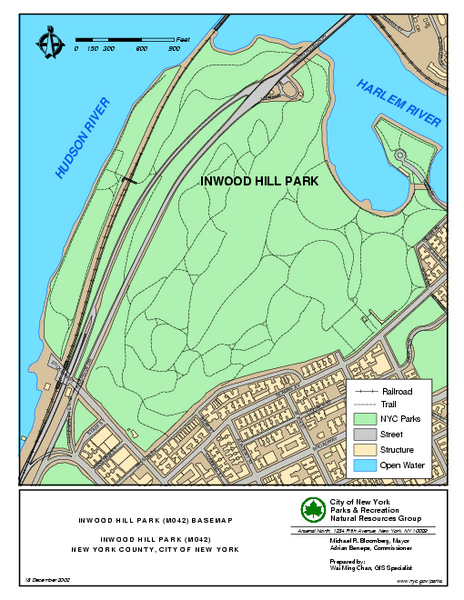
Yeah, the moving thing... I actually really dug the neighborhood, which I found when I was living in New Hampshire because some great-great-great cousins of mine or something built a country house up there in the 1850s. It's now, I think, one of the cheapest neighborhoods in all of Manhattan to live in, and it was a godsend to me to find a place up there a year and a half ago--a two-bedroom in NYC with a new kitchen and bathroom, a block away from a 200-acre park,
and the last stop of the A train was at the corner of my block.
(NOTE: These people are not on the A Train. The A Train is a subway.
Other than that, great rendition.)
Oh, and all this for under two grand.
Okay, granted, it was a fifth-floor walkup, but still, it was good. It's a very family-oriented neighborhood, mostly Dominican, and it had a lovely slow pace to it. My bank branch played Christmas carols in Spanish, and a really nice older lady on the first floor would always accept packages for me when I wasn't there--and keep them for me in her apartment until I got back.
People hold the door for each other up there, and are generally kind in a way I don't remember Manhattanites ever being. Once a checkout lady at the grocery store slipped an extra tomato into my bag when I was really broke and trying to figure out how to make some rice and beans last for three days.
Downside: two of my neighbors thought it was a great idea to leave their garbage in the lobby, and so we started getting a lot of rats.
(NOTE: Why this song? Because the movie was about a rat. Named Ben.)
Also, there seemed to be a lot of fires. Like, my laundromat burned down and then I watched an apartment directly across the street burn. Which was scary. But the firefighters got the guy out. Firefighters are seriously awesome people.
And I'm hanging a lot at my beau's place, so it seemed like a good idea to rent something in the country instead of having a place in the city I don't hang out at (see above, rats and garbage...) And also, there are amazingly good grocery stores in his neighborhood (even if they don't give you free tomatoes when you're broke. Or, you know, EVER.)
And then, well, I was out in California with my writing group for my fiftieth birthday on March 8th, (I may have mentioned this. It's still kind of freaking me out to be 50. Who thought I'd make it this long? Not me... it's great, really,) and packed up my last umpteen bazillion boxes of books and photos in storage out there into one of those pod things, to move across the country to my new funky farmhouse--and then it turns out my beau got a job in LA on what might turn out to be a really interesting TV show.
Odin willing, this might mean we're in LA six months a year. Which would be awesome, but of course now all my crap will be on the east coast. Sigh. At least I'll be able to visit my books all in one place. That will be pretty great after four years without them. And the beau rocks and I'm very proud of him for getting this job.
(NOTE: The show has absolutely nothing to do with The Pink Panther. Or Blake Edwards. I just like the song... plus it's Henry Mancini. Whom the tv show ALSO has absolutely nothing to do with.)
Also plus--hey--there is DECENT MEXICAN FOOD in California! Which is about the only thing I feel deprived of while in NYC, other than no snow and the west coast people I love and miss.
So, anyway, I have nothing of great social or political import to discuss tonight. I hope to have way more thought-waves available once the move is complete, and the outline, and I get my brain back and stuff.
I promise to do better, really really really... and hope you all have a magnificent week.
I am from Miami, so snow is not an option. Unfortunately, in Colorado Springs Saturday, where "Left Coast Crime" was taking place, snow was the order of the day. Who knew you had to use a whisk broom to clean the windshield?
Here I am on the "Hollywood" panel with Leo Maloney, Diana Gould, Harley Jane Kozak, and Clive Rosengren.
Sometimes, I think I may have spent too much time on too many panels over too many years.
I've been doing this since 1990 when "To Speak for the Dead" was published. It's still going strong on Amazon Kindle, the greatest invention since moveable type.
Had fun re-connecting with many authors from the West Coast including Jan Burke, Robin Burcell, Twist Phelan, Bill Fitzhugh, and Thomas Perry.
Did I mention that it snowed and that the drive from Colorado Springs back to the Denver airport was hairy and scary?
I am back in Miami, home of Jake Lassiter, and I have no plans to return to Colorado until a trip to Boulder...in August.
If you're tired of winter....raise your (gloved) hand.
All writers have their own
"process." When I begin a novel, I first list generic names and
because I write crime fiction that looks like this: investigator, victim and
killer. After that I add character names, physical descriptions, psychological leanings,
and a dominant personality trait. For example, the need to be a big shot: the
gasbag who can top every story you tell. Whatever you’ve done, he’s done
something bigger and better. The flip side is what that character does if his
need to be a big shot is not satisfied. Will he react with rage, withdrawal,
depression, or murder? Once I start writing scenes, it’s easy to lose track of
where I am. Here are a few tools that help me keep track of time and events:
WORD’S
NAVIGATION/DOCUMENT MAP TOOL:
In Word, the Navigation Document Map creates a sidebar that lists chapter
headings. In my old version of Word, the icon is at the top of the menu bar.
Temporarily, I name chapters with a helpful reminder of what happens within its pages. For example, 3: Tucker finds
another body. By the time I’m on chapter 23, if I have trouble remembering
a specific detail about Tucker finding that body, I can quickly look to screen
left, click on 3: Tucker finds the another
body and read through the text to refresh my memory. The Document Map
feature is more sophisticated in newer versions of Word but even my cave-girl
use of the tool serves as a compass to keep me from getting lost. It may be
worth your time to check Word Help to find out how to use this feature.
CHARACTER
TIMELINE: At
the top of a blank piece of paper, I write the character’s birth date and
continue listing dates of importance in his/her life. I ask myself what is
happening in the world on each date and how it may have affected the
character’s life and worldview then and now.
Here’s an illustration of how important
this tool can be. While teaching a class at a writers’ conference, I asked for
a volunteer from the audience to chart her character’s timeline, something she
had not done before. She was writing a crime novel featuring a woman
investigator who was a former soldier in the U.S. Army because it seemed like
an interesting detail to her at the time.
As we assigned dates in the character’s
life, we came to her Army service. The writer hadn’t thought about this before,
but based on the character’s age and other events we had already established in the timeline, the writer decided the woman had to have served during early 1991. I
asked the class if they remembered what was happening in the world during that
time. A man shouted: the first Gulf War. The writer literally gasped, realizing
that the job she had so casually given her character must have had a life-changing
impact that would be with her forever and certainly in this novel.
APPOINTMENT BOOK: I use an old-fashioned
four-columned appointment book that you can buy in any office supply store. One
could probably find a computer-scheduling program that might work better but I
like the sound of a pen or pencil scratching over paper. The paper schedule
stays by my side, allowing me to make notes while I’m writing.
I assign a column to my investigator, the killer and one or
two other characters that may need tracking. Because my books are set in Los
Angeles, the appointment book allows me to realistically get my character
through traffic and to her interviews without challenging the reader’s willing
suspension of disbelief. Because everything in a novel is causally related, it
also allows me to track the killer’s cat-and-mouse movements while my
investigator is solving the crime.
Investigator
Killer
Sidekick
Reporter
8:00
Responds
to crime scene
Closes
Scene
Watches
TV.
R
his next victim?
Arrives
at scene
Reports
live
8:15
8:30
8:45
9:00
9:15
9:30
10:00
Writing a novel is a huge undertaking
involving thousands of words and hundreds of pages. Let us know if you have any
hints that makes the task easier or illuminates the process for readers.
We are an eclectic group of crime novelists whose work includes traditional mysteries, noir, police procedurals, and thrillers.
Our observations will be as varied as our writing, and we hope you enjoy reading what we have to say.
We may not blog every day, so we recommend that you subscribe, using the box below. Don't worry. You can unsubscribe at any time. You won't hurt our feelings—okay, maybe a little.
Jacqueline Winspear
A Dangerous Place (2015)
The Care and Management of Lies (2014)
Leaving Everything Most Loved (2013)
Elegy for Eddie (2012)
The Mapping of Love and Death (2010)
Among the Mad (2009)
An Incomplete Revenge (2008)
Messenger of Truth (2006)
Pardonable Lies (2005)
Birds of a Feather (2004)
Maisie Dobbs (2003) *EDGAR NOMINEE*
Paul Levine
Bum Rap (2015)
State vs. Lassiter (2013)
Lassiter (2011)
Illegal (2009)
Trial & Error (2007)
Kill All the Lawyers (2006)
The Deep Blue Alibi (2006) *EDGAR AND THRILLER NOMINEE*
Solomon vs. Lord (2005)
9 Scorpions (1998) more titles...
James O. Born
Scent of Murder (2015)
Border Wars (2014) with co-author Lou Dobbs
Burn Zone (2008)
Field of Fire (2007)
Escape Clause (2006) *FLORIDA BOOK AWARD WINNER*
Shock Wave (2005)
Walking Money (2004)
Science Fiction novels written as James O'Neal
The Double Human (2010)
The Human Disguise (2009)
Patricia Smiley
Pacific Homicide (2016)
Cool Cache (2009)
Short Change (2007)
Cover Your Assets (2005)
False Profits (2004)
Short story:
"Party's Over," Ellery Queen Mystery Magazine (December 2007)
Short story:
"The Offer," Two of the Deadliest, anthology edited by
Elizabeth George, Harper Collins (2009)
Guest Bloggers
Ridley Pearson
The Red Room (2014)
Choke Point (2013)
The Risk Agent (2012)
In Harms Way (2011)
Killer Summer (2009)
Killer View (2008)
Killer Weekend (2007)
Cut and Run (2005)
The Body of David Hayes (2004) more titles...
Books for young readers:
Science Fair (written with Dave Barry) (2008)
Starcatchers series
Kingdom series
Neverland series
Steel Trapp series more titles...
Cornelia Read
Valley of Ashes (2012)
Invisible Boy (2010)
The Crazy School (2008)
A Field of Darkness (2006) *EDGAR NOMINEE*
Short story:
"Hungry Enough," A Hell of a Woman anthology, Busted Flush Press (2007)