Patty here…
Research has shown that music is tied to the emotional circuitry of our brains and therefore affects how we feel, both positively and negatively. Sometimes music produces more than simple emotions. It triggers something primal. A executive friend of mine once admitted there was one note in a song from the musical Les Miserables that made him sob every time he heard it. I find this intriguing, so lately I’ve been doing a little field research of my own.
Case Study Number One: Jersey Boys
Last Friday night I went to see Jersey Boys at the Ahmanson Theatre in Los Angeles. For those of you who don’t already know, it’s the story of the rise and fall of The Four Seasons singing group, the talented guys who brought us “Sherry,” “Big Girls Don’t Cry,” Walk Like a Man,” “Let’s Hang on to What We’ve Got,” and many more hit songs. Maybe it was Frankie Valli’s high notes that got to me. His music made me feel happy (I was one of those people dancing in the aisles as I left the theatre) and sad (one more story of young people with talent and grit who scratch their way to the top only to see the trappings of fame rip them apart). Seeing what was happening in their lives and the songs those events inspired made for a rich and rewarding experience.
You’ll see what I mean when you watch the real Four Seasons singing “December, 1963 (Oh, What a Night),” allegedly inspired by a young Gaudio’s first sexual experience, which took place on the road in—what else—December, 1963.
Erich Bergen, Michael Ingersoll, Christopher Kale Jones, and Deven May are the four talented guys who star in the show. They made me fall in love with them, with The Four Seasons, and with whole theatre experience. See for yourself. Here they with Jay Leno.
Case Study Number Two: Toning
Some years ago a friend invited me to a toning concert at a psychic woo-woo alternative church. Being game for anything, I agreed to go. I didn’t know at the time but toning is an ancient and powerful healing sound used to release tension and balance the mind, body, and spirit. Here's a Web site I found in which Don Campbell describes toning as, "Simple and audible sound, prolonged long enough to be identified. Toning is the conscious elongation of a sound using the breath and voice."
Shortly after we arrived at the church, a dozen average-looking people walked onto the stage dressed in outfits that were only slightly outlandish, nothing your nerdy cousin wouldn’t wear. They all took one collective breath and began toning. Simple and audible? Hmmm. It sounded more like an alien giving birth. I must have had a lot of pent-up tension because almost immediately I started to laugh. I mean HYSTERICALLY. I couldn’t stop. I was sitting in a chair, bent over at the waist wheezing, barely able to breathe.
At one point I glanced at my friend. Her eyes were wide with panic. I knew what she was thinking—I’m with a total lunatic. I would have left the sanctuary and spared her the embarrassment of having dozens of disapproving gazes aimed at her, but I was laughing too hard to stand much less walk.
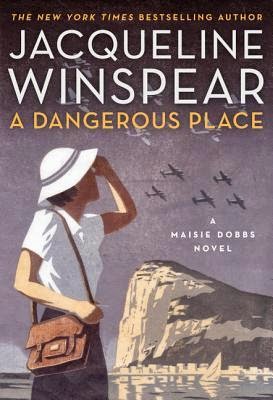
Okay, you gotta know I’m laughing at my computer as I write this because just thinking about toning sends me to a dangerous place. I’m not sure my brain has ever recovered, which could explain an awful lot. Make me feel good and tell me this has happened to you.
On a serious note, on this Memorial Day I'm wishing for the world to know peace, forgiveness, and remembrance. And to you and yours, the best always.
Monday, May 28, 2007


Friday, May 25, 2007
A Bit Of A Medley, Today ....
from Jacqueline
Just when you thought you could not hear any more mind-blowingly unbelievable news, along comes a snippet that makes you think .... WHAT????
This is the sort of news that should have made it into Paul’s feelgood post this week – because there has to be an upside to it:
“Jalal Talabani, a former guerrilla fighter and now the Iraqi President, has checked into an American health clinic - in an effort to tackle his obesity problem Officials at the Mayo Clinic in Minnesota confirmed this week that Mr. Talabani checked into the establishment for a series of tests. They declined to provide further details and added in a statement: "No further information updates are planned until completion of the President's comprehensive examination."
Mr. Talabani, 73, has recently complained of tiredness and suffering from the ill effects of being overweight. In February he was flown to the King Hussein Medical Centre in Amman, Jordan, on a medically equipped US military plane, for treatment for extreme fatigue and dehydration after he collapsed. He had been unconscious when he was rushed to a local hospital but recovered enough to be flown to Jordan. He returned home 17 days later.
When he left the Kurdish city of Sulaimaniya in northeast Iraq on Sunday, his office quoted him as saying at a news conference several days earlier: "I don't have any health problems except my obesity and I will treat it, God willing." (The Independent).

Is it me, or is there something really whacky, something way off kilter in the world, when the leader (and I use that term loosely) of a country in the midst of a terrible war, not only has time to fill his face to the point of being unconscious, but is not using enough calories to burn it all off. And now he’s here in the USA – and let’s face it, this is nirvana for the rehab-bound – to be sorted out. In my humble opinion, of all the sortings-out of which this particular human being might be in need, eating issues don’t immediately spring to the top of the list.
As Leif Enger said in Peace Like A River: “Make of that what you will.”
Onward ...

I would like to explain why this is going to be one of my more nonsensical posts, and why I may be given to rambling: I hurt like hell this week. I am in agony. My two passions have come together again and I am trying to work through the pain. Not only have I ramped up the dressage training in the past two weeks, preparing for what they call a “clinic” with a trainer referred to as a “master of horsemanship” (and if my shoulder goes on like this, it’ll be another clinic I’ll be off to), but I am in the midst of revisions on my fifth novel. Tearing into the flesh of the story to sort out the kinks, streamline the prose and hopefully make a readable book out of it.

I am not a natural reworker of words (is there such a thing, by the way?), though I have come to enjoy the demands of the process. But I love that first blast when I am the storyteller, telling the tale that’s been rolling around in my head for months, transforming the pictures in my mind’s eye into words on the page. However, as we know, it doesn’t end there – now I have to be a technician of language, the advocate for the reader, questioning the right of every word to be in the book (Hey, you – yes, you, “ridged” – what makes you think you should be in that paragraph, eh? Come on, speak up, why should I have used you when there were plenty of other choices?”)
And on the riding front, I’m taking apart movements I know, deconstructing them to find out why I cannot perfect a certain routine, and I’m trying new things (raising that bloody bar on myself, the one I’m always going on about in connection with my writing) which is how I’ve managed to upset the arm that was broken so badly six years ago, and now I can hardly move the thing. Oh, it’s only a pulled this or that, probably my internal spare parts from Ace Hardware have gone a bit rusty, nothing forever painful (at least I hope not – the world doesn’t have enough Tylenol), but I’m wondering if there’s a lesson I can learn here, something bigger, something that will translate to the business of writing.

I told my husband about the injury today – he’s away from home until early next week (guess he heard me say I was starting the rewriting). I explained what happened, and he simply suggested finding the big rubber band exercise do-dads I had to use when I was in physical therapy following my accident, and gently working those muscles so that I get strong again. He emphasized “gently” knowing that, at times, I can be a bit of a bull in a china shop, a bit over-enthused, which is how this happened in the first place.

So I’ve decided to take that advice further, to go to the next stage in the rewriting process gently, quietly. I will not be a demon with the delete key and I will not say, “That’s staying where it is!” without due consideration of the big picture. And I am going to reach for the Tylenol so that it doesn’t hurt when I hit the keyboard.
Anybody know anything about voice recognition software?
Have a lovely weekend, one and all. And remember to remember, come Monday.

Just when you thought you could not hear any more mind-blowingly unbelievable news, along comes a snippet that makes you think .... WHAT????
This is the sort of news that should have made it into Paul’s feelgood post this week – because there has to be an upside to it:
“Jalal Talabani, a former guerrilla fighter and now the Iraqi President, has checked into an American health clinic - in an effort to tackle his obesity problem Officials at the Mayo Clinic in Minnesota confirmed this week that Mr. Talabani checked into the establishment for a series of tests. They declined to provide further details and added in a statement: "No further information updates are planned until completion of the President's comprehensive examination."
Mr. Talabani, 73, has recently complained of tiredness and suffering from the ill effects of being overweight. In February he was flown to the King Hussein Medical Centre in Amman, Jordan, on a medically equipped US military plane, for treatment for extreme fatigue and dehydration after he collapsed. He had been unconscious when he was rushed to a local hospital but recovered enough to be flown to Jordan. He returned home 17 days later.
When he left the Kurdish city of Sulaimaniya in northeast Iraq on Sunday, his office quoted him as saying at a news conference several days earlier: "I don't have any health problems except my obesity and I will treat it, God willing." (The Independent).

Is it me, or is there something really whacky, something way off kilter in the world, when the leader (and I use that term loosely) of a country in the midst of a terrible war, not only has time to fill his face to the point of being unconscious, but is not using enough calories to burn it all off. And now he’s here in the USA – and let’s face it, this is nirvana for the rehab-bound – to be sorted out. In my humble opinion, of all the sortings-out of which this particular human being might be in need, eating issues don’t immediately spring to the top of the list.
As Leif Enger said in Peace Like A River: “Make of that what you will.”
Onward ...

I would like to explain why this is going to be one of my more nonsensical posts, and why I may be given to rambling: I hurt like hell this week. I am in agony. My two passions have come together again and I am trying to work through the pain. Not only have I ramped up the dressage training in the past two weeks, preparing for what they call a “clinic” with a trainer referred to as a “master of horsemanship” (and if my shoulder goes on like this, it’ll be another clinic I’ll be off to), but I am in the midst of revisions on my fifth novel. Tearing into the flesh of the story to sort out the kinks, streamline the prose and hopefully make a readable book out of it.

I am not a natural reworker of words (is there such a thing, by the way?), though I have come to enjoy the demands of the process. But I love that first blast when I am the storyteller, telling the tale that’s been rolling around in my head for months, transforming the pictures in my mind’s eye into words on the page. However, as we know, it doesn’t end there – now I have to be a technician of language, the advocate for the reader, questioning the right of every word to be in the book (Hey, you – yes, you, “ridged” – what makes you think you should be in that paragraph, eh? Come on, speak up, why should I have used you when there were plenty of other choices?”)
And on the riding front, I’m taking apart movements I know, deconstructing them to find out why I cannot perfect a certain routine, and I’m trying new things (raising that bloody bar on myself, the one I’m always going on about in connection with my writing) which is how I’ve managed to upset the arm that was broken so badly six years ago, and now I can hardly move the thing. Oh, it’s only a pulled this or that, probably my internal spare parts from Ace Hardware have gone a bit rusty, nothing forever painful (at least I hope not – the world doesn’t have enough Tylenol), but I’m wondering if there’s a lesson I can learn here, something bigger, something that will translate to the business of writing.

I told my husband about the injury today – he’s away from home until early next week (guess he heard me say I was starting the rewriting). I explained what happened, and he simply suggested finding the big rubber band exercise do-dads I had to use when I was in physical therapy following my accident, and gently working those muscles so that I get strong again. He emphasized “gently” knowing that, at times, I can be a bit of a bull in a china shop, a bit over-enthused, which is how this happened in the first place.

So I’ve decided to take that advice further, to go to the next stage in the rewriting process gently, quietly. I will not be a demon with the delete key and I will not say, “That’s staying where it is!” without due consideration of the big picture. And I am going to reach for the Tylenol so that it doesn’t hurt when I hit the keyboard.
Anybody know anything about voice recognition software?
Have a lovely weekend, one and all. And remember to remember, come Monday.

Wednesday, May 23, 2007
This is a little part of my job
Americans have a tendency to take a lot of things for granted. Some people even feel they’re owed certain things. When I was a kid I politicked for my own phone with virtually no effect on my father. Instead I heard the “I walked to school in the snow” speech. Now my kids expect to have cell phones and, since I was raised in South Florida I don’t have any leverage with how I walked to school so I caved in and got them their own cell phones.
One of the things I’ve worked on since college is not to take things for granted. It can be easy to accept good fortune and move on but I try to appreciate the things that I have. One of things that I appreciate and realize how lucky I am to have it is my job. Not just the field in which I work, law-enforcement, but my specific job. As a special agent with the Florida Department of Law Enforcement, or as its known here, FDLE, I get to do a variety of things from undercover to dignitary protection. I like getting up most days and not knowing exactly what I’ll be doing during the day. In a way, most days are a mini-adventure which I look forward to.
I spent four years as a U.S. Drug agent and liked the challenge but wanted more variety in my life. I also didn’t want to be transferred. In 1990 I accepted a position with my current employer.
There is no true “state police” in the state of Florida. There is the uniformed highway patrol which deals with motor vehicle related issues. They are known here as “troopers” and they do a fine job. There are other law enforcement agencies with specific duties like the Florida Wildlife Commission which deals with conservation law. The FWC is a kick-ass outfit who work under difficult conditions and do a good job.
My agency is the chief investigative agency and answers to the Governor and cabinet. FDLE investigates narcotics, violet crime, public corruption, economic crime and now is responsible for the state’s domestic security issues. We work closely with other agencies and I particularly like the friends I’ve made in the course of my work. The job also contributes to my writing. From odd characters to comments I hear every day, the job is a life line to creativity. Another thing I don’t take for granted.
Here are a few photos from work. Most are fairly recent and capture the essence of variety that makes my job so enjoyable.
From practice on the range where timing and identification of targets are tested like this
To covering a demonstration at the Port of Palm Beach, I get a good dose of South Florida sun. The demonstrators in this instance were very polite. I agreed with their cause but duty dictated that law enforcement ensure no one interfered with the operations of the port. They were a well-meaning group.

I meet interesting people like Mitt Romney. FDLE protects our Governor and visiting Governors. Romney was the Governor of Massachusetts at the time of this photo.
This was an interesting person at one time. Now he’s a little quiet. Actually he’s made of plastic and resides at the medical examiner’s office.
Since my last book concerned bombs I spent a little time with the local Sheriff’s bomb squad and learned I never want to be a bomb tech.

 Just a quick tour of the old day job. I don't like people to get the wrong idea about police work. No one is forced to be a cop, most law enforcement agents want to be doing their job. At least that's my experience with cops. Sure police may bitch or talk about it being tough but the attrition rate is low compared to other professions.
One of the things I’ve worked on since college is not to take things for granted. It can be easy to accept good fortune and move on but I try to appreciate the things that I have. One of things that I appreciate and realize how lucky I am to have it is my job. Not just the field in which I work, law-enforcement, but my specific job. As a special agent with the Florida Department of Law Enforcement, or as its known here, FDLE, I get to do a variety of things from undercover to dignitary protection. I like getting up most days and not knowing exactly what I’ll be doing during the day. In a way, most days are a mini-adventure which I look forward to.

I spent four years as a U.S. Drug agent and liked the challenge but wanted more variety in my life. I also didn’t want to be transferred. In 1990 I accepted a position with my current employer.
There is no true “state police” in the state of Florida. There is the uniformed highway patrol which deals with motor vehicle related issues. They are known here as “troopers” and they do a fine job. There are other law enforcement agencies with specific duties like the Florida Wildlife Commission which deals with conservation law. The FWC is a kick-ass outfit who work under difficult conditions and do a good job.
My agency is the chief investigative agency and answers to the Governor and cabinet. FDLE investigates narcotics, violet crime, public corruption, economic crime and now is responsible for the state’s domestic security issues. We work closely with other agencies and I particularly like the friends I’ve made in the course of my work. The job also contributes to my writing. From odd characters to comments I hear every day, the job is a life line to creativity. Another thing I don’t take for granted.
Here are a few photos from work. Most are fairly recent and capture the essence of variety that makes my job so enjoyable.

From practice on the range where timing and identification of targets are tested like this
To covering a demonstration at the Port of Palm Beach, I get a good dose of South Florida sun.
 The demonstrators in this instance were very polite. I agreed with their cause but duty dictated that law enforcement ensure no one interfered with the operations of the port. They were a well-meaning group.
I meet interesting people like Mitt Romney. FDLE protects our Governor and visiting Governors. Romney was the Governor of Massachusetts at the time of this photo.
This was an interesting person at
 one time. Now he’s a little quiet. Actually he’s made of plastic and resides at the medical examiner’s office.
Sometimes I see unusual things. This is the scene of a gigantic explosion caused by a man working with illegal flash powder.  The resulting blast rocked houses miles away, including my own.
The resulting blast rocked houses miles away, including my own.Most people think the TV concept of undercover operations is accurate. They believe that police agencies send cops into some criminal organization and forget about them until an arrest is made.  That's ridiculous. Here is a quick deal that resulted in an arrest and ATF agents making it look like I was arrested too.
 That's ridiculous. Here is a quick deal that resulted in an arrest and ATF agents making it look like I was arrested too.
 Since my last book concerned bombs I spent a little time with the local Sheriff’s bomb squad and learned I never want to be a bomb tech.

 Just a quick tour of the old day job. I don't like people to get the wrong idea about police work. No one is forced to be a cop, most law enforcement agents want to be doing their job. At least that's my experience with cops. Sure police may bitch or talk about it being tough but the attrition rate is low compared to other professions.
What do you think? Could you be a bomb tech? I couldn't.
Tuesday, May 22, 2007
All The News That's Fit to Blog
From Paul
Lately, our posts have brimmed with gravitas, angst, and pessimism. Politics, war, the human condition, even the disappearing newspaper book sections. Honestly, it could make you scream.

I'd like to lighten up today.
I'm looking for good news.
Short sentences.
Noun, verb, object. Boy meets girl. Man bites dog. I like "The Simpsons."

Now in its 18th season, "The Simpsons" recently broadcast its 400th episode. Four hundred! That's good news. Especially for Matt ("Richer than Croesus and a Great Guy, Too") Groening. College courses are devoted to the philosophical questions raised by the show, and not just whether Homer should eat all the doughnuts. It's smart and funny and laced with social commentary. Long may it live. ("The Simpsons" feature film is due in July).
****************************************************************
MORE GOOD NEWS. PARIS HILTON WILL DO JAIL TIME
Paris Hilton will spend about three weeks in jail. We here at Naked Scribblers absolutely, positively refuse to post any pictures of Ms. Hilton. However, cartoons are permissible. Here's how Newsday's Pulitzer prize-winning Walt Handelsman sees it.
 />
/>
***************************************************************
GOOD NEWS THAT SEEMS REALLY BAD AT FIRST
A 17-year-old male student at the ritzy Harvard-Westlake School here in Studio City allegedly hit a female classmate 40 times with a claw hammer, breaking her nose, shattering her leg, and splitting open her scalp.
Are you nuts, Paul? How could that be good news?
Let me explain, chronologically.
The boy and girl take an Advanced Placement exam. The boy drives the girl to a nearby Jamba Juice for a snack.
(He drives her in his Jaguar. For now, I'll refrain from commenting on parents who buy their brats Mercedes, BMW's, and Jaguars, which daily clog Coldwater Canyon in front of the school).
The boy parks the Jaguar on a side street, says he's going to kill himself and take someone with him. He reaches into his backpack...
Now, if you didn't already know what happened, you'd think: HE'S PULLING OUT A HANDGUN. Right?
But he doesn't t have a gun. His parents -- both Beverly Hills physicians -- apparently don't own a gun. So he grabs the hammer. Okay, he inflicts some damage, but according to The Los Angeles Times, the girl is getting out of the hospital and hoping to attend her prom.
So the GOOD NEWS is that the nutty kid (now confined to a psychiatric facility) didn't have access to a gun. Otherwise, there might be two dead teens.
******************************************************************
UPDATE FROM MOJITO-VILLE
The national drink of Miami is the mojito, the Cuban cocktail. (I say "national" drink, inasmuch as Miami is a foreign country). As regular readers know, I am an aficionado of the drink, made with light rum, fresh lime, squeezed sugar cane, club soda, and fresh mint leaves.
Now, my Miami friends say, "Move Over Mojito." The Caipirinha has come to town. It's pronounced kai-pur-een-ya, which sounds like something Al Gore would try to dance to. The Caipirinha is made with an aged Brazilian rum called Cachaca, mixed with various fruits (strawberry or blackberry puree seems popular), and no mint. It sounds heavier and not nearly as refreshing as a mojito, but I will report back to you after further research and investigation.
And that's the news from Lake Hollywood, where all the women are Botoxed, all the men are in meetings, and all the children are in therapy.
If you want to send this post to a friend, relative, or inmate (or all three), just click on the envelope icon below.
Paul
Lately, our posts have brimmed with gravitas, angst, and pessimism. Politics, war, the human condition, even the disappearing newspaper book sections. Honestly, it could make you scream.

I'd like to lighten up today.
I'm looking for good news.
Short sentences.
Noun, verb, object. Boy meets girl. Man bites dog. I like "The Simpsons."

Now in its 18th season, "The Simpsons" recently broadcast its 400th episode. Four hundred! That's good news. Especially for Matt ("Richer than Croesus and a Great Guy, Too") Groening. College courses are devoted to the philosophical questions raised by the show, and not just whether Homer should eat all the doughnuts. It's smart and funny and laced with social commentary. Long may it live. ("The Simpsons" feature film is due in July).
****************************************************************
MORE GOOD NEWS. PARIS HILTON WILL DO JAIL TIME
Paris Hilton will spend about three weeks in jail. We here at Naked Scribblers absolutely, positively refuse to post any pictures of Ms. Hilton. However, cartoons are permissible. Here's how Newsday's Pulitzer prize-winning Walt Handelsman sees it.
 />
/>***************************************************************
GOOD NEWS THAT SEEMS REALLY BAD AT FIRST
A 17-year-old male student at the ritzy Harvard-Westlake School here in Studio City allegedly hit a female classmate 40 times with a claw hammer, breaking her nose, shattering her leg, and splitting open her scalp.
Are you nuts, Paul? How could that be good news?
Let me explain, chronologically.
The boy and girl take an Advanced Placement exam. The boy drives the girl to a nearby Jamba Juice for a snack.
(He drives her in his Jaguar. For now, I'll refrain from commenting on parents who buy their brats Mercedes, BMW's, and Jaguars, which daily clog Coldwater Canyon in front of the school).
The boy parks the Jaguar on a side street, says he's going to kill himself and take someone with him. He reaches into his backpack...
Now, if you didn't already know what happened, you'd think: HE'S PULLING OUT A HANDGUN. Right?
But he doesn't t have a gun. His parents -- both Beverly Hills physicians -- apparently don't own a gun. So he grabs the hammer. Okay, he inflicts some damage, but according to The Los Angeles Times, the girl is getting out of the hospital and hoping to attend her prom.
So the GOOD NEWS is that the nutty kid (now confined to a psychiatric facility) didn't have access to a gun. Otherwise, there might be two dead teens.
******************************************************************
UPDATE FROM MOJITO-VILLE
The national drink of Miami is the mojito, the Cuban cocktail. (I say "national" drink, inasmuch as Miami is a foreign country). As regular readers know, I am an aficionado of the drink, made with light rum, fresh lime, squeezed sugar cane, club soda, and fresh mint leaves.

Now, my Miami friends say, "Move Over Mojito." The Caipirinha has come to town. It's pronounced kai-pur-een-ya, which sounds like something Al Gore would try to dance to. The Caipirinha is made with an aged Brazilian rum called Cachaca, mixed with various fruits (strawberry or blackberry puree seems popular), and no mint. It sounds heavier and not nearly as refreshing as a mojito, but I will report back to you after further research and investigation.
And that's the news from Lake Hollywood, where all the women are Botoxed, all the men are in meetings, and all the children are in therapy.
If you want to send this post to a friend, relative, or inmate (or all three), just click on the envelope icon below.
Paul
Monday, May 21, 2007
Where have all the book critics gone?
Patty here...
In case you haven’t heard, there's a storm brewing.

An alarming number of newspapers nationwide are cutting costs by eliminating book reviews from their pages. This does not bode well for the many writers trying to be heard above the din of the crowded book market.
Michael Connelly weighed in on the subject in this recent Los Angeles Times article:

A burgeoning number of Internet bloggers have picked up the slack left by ousted newspaper reviewers, but are they up to the job? Not according to Richard Schickel.
Schickel, who reviews for the Times and also for Time magazine, published a well-reasoned and masterfully written op-ed piece in Sunday’s Los Angeles Times, called “Not everybody’s a critic,” in which he challenged the notion that Internet bloggers can or should fill the void left by the downsizing of professional reviewers.
Schickel defines criticism:
He cites Charles-Augustin Sainte-Beuve, Edmund Wilson, and George Orwell as examples of the best that literary criticism had to offer. “All three wrote for intelligent readers who emerged from their reviews grateful to know more than they did when they started to read, grateful for their encounter with a serious and, indeed, superior mind. We do not—maybe I ought to make that “should not”—read to confirm our own prejudices and stupidity."
He claims the reviewer’s job is to “initiate intelligent dialogue about the work in question, beginning a discussion that, in some cases, will persist down the years, even down the centuries.”

Here’s what he thinks criticism is not:
Personal opinion. Hack writing.
"Anyone who has written a book has had the experience. Your publisher kindly forwards the clippings, and you are appalled by the sheer uselessness of their spray-painted opinions."
"And we have to find in the work of reviewers something more than idle opinion-mongering. We need to see something other than flash, egotism and self-importance. We need to see their credentials. And they need to prove, not merely assert, their right to an opinion."
"I don’t think it’s impossible for bloggers to write intelligent reviews. I do think, however, that a simple “love” of reading…is an insufficient qualification for the job."
Here’s what I think:
Book review blogs have their place, but I agree with Schickel. It is the exceptional amateur who can equal the seasoned writing and well-rounded analysis of a professional critic, maybe because amateurs don’t have the time or incentive to dig deep enough to find the art of it all.
What do you think?
If you want to send this post to a friend, just click on the envelope icon below.
In case you haven’t heard, there's a storm brewing.

An alarming number of newspapers nationwide are cutting costs by eliminating book reviews from their pages. This does not bode well for the many writers trying to be heard above the din of the crowded book market.
Michael Connelly weighed in on the subject in this recent Los Angeles Times article:
I can't help but wonder, though, how long Harry would have lasted had he been born in today's newspaper environment. Across the country, papers are cutting back on the space, attention and care they devote to books. Recently, for instance, the Atlanta Journal-Constitution announced that the position of book editor would be eliminated in a cost-cutting move. Without a specific editor directing book coverage, the paper will rely more heavily on reviews from wire services.
But that's just the latest in an ongoing crisis. The Chicago Tribune announced last week that it was moving its books section from Sunday to the less-read Saturday paper — an edition that becomes almost obsolete by noon, when the early Sunday edition hits the stands. At the Raleigh News & Observer, the book editor's position was recently cut. At the Dallas Morning News, the book critic quit rather than face significant space reductions. Books coverage has also been cut at the Orlando Sentinel, the Cleveland Plain Dealer and other papers.
Even at the Los Angeles Times, the fine newspaper at which I am proud to have once worked as a reporter, the attention devoted to books is changing. Gone is the stand-alone Book Review. Two weeks ago, Book Review was merged with Sunday Opinion as part of a plan to save pages and save money.

A burgeoning number of Internet bloggers have picked up the slack left by ousted newspaper reviewers, but are they up to the job? Not according to Richard Schickel.
Schickel, who reviews for the Times and also for Time magazine, published a well-reasoned and masterfully written op-ed piece in Sunday’s Los Angeles Times, called “Not everybody’s a critic,” in which he challenged the notion that Internet bloggers can or should fill the void left by the downsizing of professional reviewers.
Schickel defines criticism:
[Criticism]…is, or should be, an elite enterprise, ideally undertaken by individuals who bring something to the party beyond their hasty, instinctive opinions of a book (or any other cultural object). It is work that requires disciplined taste, historical and theoretical knowledge and a fairly deep sense of the author’s (or filmmaker’s or painter’s) entire body of work, among other qualities.
He cites Charles-Augustin Sainte-Beuve, Edmund Wilson, and George Orwell as examples of the best that literary criticism had to offer. “All three wrote for intelligent readers who emerged from their reviews grateful to know more than they did when they started to read, grateful for their encounter with a serious and, indeed, superior mind. We do not—maybe I ought to make that “should not”—read to confirm our own prejudices and stupidity."
He claims the reviewer’s job is to “initiate intelligent dialogue about the work in question, beginning a discussion that, in some cases, will persist down the years, even down the centuries.”

Here’s what he thinks criticism is not:
Personal opinion. Hack writing.
"Anyone who has written a book has had the experience. Your publisher kindly forwards the clippings, and you are appalled by the sheer uselessness of their spray-painted opinions."
"And we have to find in the work of reviewers something more than idle opinion-mongering. We need to see something other than flash, egotism and self-importance. We need to see their credentials. And they need to prove, not merely assert, their right to an opinion."
"I don’t think it’s impossible for bloggers to write intelligent reviews. I do think, however, that a simple “love” of reading…is an insufficient qualification for the job."
Here’s what I think:
Book review blogs have their place, but I agree with Schickel. It is the exceptional amateur who can equal the seasoned writing and well-rounded analysis of a professional critic, maybe because amateurs don’t have the time or incentive to dig deep enough to find the art of it all.
What do you think?
If you want to send this post to a friend, just click on the envelope icon below.
Friday, May 18, 2007
Just One ... Thing After Another
from Jacqueline
If you’ve not seen the film The History Boys yet, it’s well worth the cost of renting the DVD. I’ve seen it twice, once on the way back from England (gotta love Virgin Atlantic’s film selection, it’s the best), and again last week. My husband is usually the one who nips out to the video store to grab a movie – and if you wonder why we don’t use Netflix or some other online resource, it’s because we like to support local businesses – but he can get rather frustrated when he gets home with a new movie only to find that I’ve seen it on a ’plane. But I was up for watching The History Boys a second time.

The story is a simple one, really, based on the award-winning play by Alan Bennett. A group of English sixth-formers, having just completed their “A” levels (the really hard exams that university entrance is based upon), remain at school to take their Oxbridge entrance exams. Yes, those hallowed halls of learning are so elite, you have to take a special exam if you want to go there. So, this film is about the relationships between the boys and their teachers – and a lot more besides. However, there’s one scene that has been rattling around in my mind ever since that first screening, at about 35,000ft halfway across the pond. In a mock interview – the boys are preparing for their interviews at Oxford – one of the boys is asked to talk about history. He’s the one who can best be described as not the sharpest knife in the drawer, however, if he had just managed to get enough “A’s” at “A” level to even take the exam, he’s not too shabby, either. His reply is simple, he just shrugs and says that, to be honest, history is “just one f*****g thing after another.”
I look at the newspaper sometimes, and I think the same thing, in fact, what the hell is happening in this world? Trying to keep up with all the wars, all the street killings, all the death and destruction is like being one of those circus performers who balance plates on bamboo sticks, with the goal to keep all the plates spinning. This world has spun right out of control, and there is no one person, no group, political party or country who seems to have the guts, power, statesmanship, ability – or humility, even – to say, “Enough!” This is where the people have to do something, and I wonder, what on earth we are going to do? How can I, or you, or anyone, as a private individual, no matter how many organizations we subscribe to, apply enough braking power to this runaway machine that is humanity gone mad in the 21st century? We have a major crisis of biblical proportions and we cannot stop it.

Has it ever been this bad? And what happened afterwards? In times past, we’ve had wars, conflagrations that engulfed almost every country on earth, but the war on the streets had not reached the same level of destruction – or had it? My mind starts to spin with history, with that one f*****g thing after another.

Between the two world wars there was the depression, and prohibition, and there were the years of the big underworld crimes on both sides of the Atlantic – remember The Untouchables? During Vietnam, here in the US there were race riots, and the Klan, and heaven knows what else. One of the reasons why the aftermath of WW2 in Britain was so bad, was not only the dreadful lack of food, but the numbers of trained killers who were demobilized from the military and were running the gangs and black markets (read Tony Broadbent’s excellent mystery novels, The Smoke and Spectres in the Smoke and you’ll get a sense of it).

Then there were the declining years of empires, of colonization, and look what went on then – in India, Kenya, Malaya, for example – as insurgents stepped forward to take back the lands, and the death and destruction visited upon the people in guerrilla warfare that followed. Just one thing after another.
I love history, I especially love social history, looking at what extraordinary times do to ordinary people. But I am increasingly incensed by our inability to learn from it.
One of my current favorite television shows (and I might add, I rarely watch television, and can count shows I am willing to watch on the fingers of one hand), is the new Robin Hood from the BBC. It’s a rather wacky romp through the Middle Ages, probably inspired by the success of Heath Ledger’s breakout film, The Knight’s Tale, plus a bit of Star Wars, and perhaps even a bit of Deadwood. The characters all have great teeth, Maid Marion’s skin sparkles, and the Sheriff of Nottingham is one of the most likeable rotters on the screen. We all know that Robin gets a kick out of giving to the poor and likes being a popular outlaw, and Little John is more like Harry Potter’s Hagrid. However, it’s interesting the subjects they touch upon, and the little ah-ha’s here and there.

The last show opened with a Crusades (Holy Wars) veteran losing his marbles in a marketplace, besieged by the devils of his mind, the memories of war, and the killing. And in the end it was a Saracen – a Muslim - who helped him, a prince who had come to England to seek a solution to the wars, to lobby for a peace that would end the killing of both Christians and Muslims. The Crusades were fought between 1095–1291, with more fighting in the centuries that followed. And look where we are today, just one fighting thing after another.

I have heard the same phrase twice just recently, with reference to George Bush and Tony Blair: “History will judge them differently.” I suppose that means, “differently to the way in which people are judging them now.” Or words to that effect. I wondered about that, especially during another scene in that film, where the young history teacher, with his class at a World War One memorial, said that the reason we commemorate war, the reason we make much of the fallen, is to draw attention away from the mistakes, the huge errors of judgment that led to the slaughter.

The words suggested that the collective judgment of the people is deflected by the very leaders who made those decisions, who sent our youth to their deaths, and in providing a means and a place for us to come together, they have encouraged us to join in grief, in remembrance, while those who lobbied for the crusade are let off the hook, allowed to go on their lecture tours, take up their lucrative board-memberships, build their libraries and live in relative comfort without the weight of loss suffered by so many in their name, and as a result of such hubris. On the other hand, you could say that enough books have been written about the Great War, and Vietnam, for example, that we know a fair bit about what went wrong in the past. And you don’t see too many memorials to those lost through lack of access to affordable healthcare, or because a government is not adequately prepared for a natural disaster. Or because we have a drug problem ... scroll back to Cornelia’s post of two days ago, it’s Naked Authors Required Reading.
But at the end of the day, do they care at all, these decision makers – with their post-presidential or prime-ministerial cushy retirements – how history might judge them? After all, the world news seems to be one big bad thing after another. Has been for centuries. And we’re still here to look back at it all.

Thank heavens for posts like Jim’s yesterday, we need all the wonder we can get.
Interesting note: In the news today, Robert DiNiro and Al Pacino will be on the screen again in a movie called, “Righteous Kill.” Said co-producer, Al Lerner, “It’s an event in world history.” They're both great actors, but please do not kid yourself!

If you’ve not seen the film The History Boys yet, it’s well worth the cost of renting the DVD. I’ve seen it twice, once on the way back from England (gotta love Virgin Atlantic’s film selection, it’s the best), and again last week. My husband is usually the one who nips out to the video store to grab a movie – and if you wonder why we don’t use Netflix or some other online resource, it’s because we like to support local businesses – but he can get rather frustrated when he gets home with a new movie only to find that I’ve seen it on a ’plane. But I was up for watching The History Boys a second time.

The story is a simple one, really, based on the award-winning play by Alan Bennett. A group of English sixth-formers, having just completed their “A” levels (the really hard exams that university entrance is based upon), remain at school to take their Oxbridge entrance exams. Yes, those hallowed halls of learning are so elite, you have to take a special exam if you want to go there. So, this film is about the relationships between the boys and their teachers – and a lot more besides. However, there’s one scene that has been rattling around in my mind ever since that first screening, at about 35,000ft halfway across the pond. In a mock interview – the boys are preparing for their interviews at Oxford – one of the boys is asked to talk about history. He’s the one who can best be described as not the sharpest knife in the drawer, however, if he had just managed to get enough “A’s” at “A” level to even take the exam, he’s not too shabby, either. His reply is simple, he just shrugs and says that, to be honest, history is “just one f*****g thing after another.”
I look at the newspaper sometimes, and I think the same thing, in fact, what the hell is happening in this world? Trying to keep up with all the wars, all the street killings, all the death and destruction is like being one of those circus performers who balance plates on bamboo sticks, with the goal to keep all the plates spinning. This world has spun right out of control, and there is no one person, no group, political party or country who seems to have the guts, power, statesmanship, ability – or humility, even – to say, “Enough!” This is where the people have to do something, and I wonder, what on earth we are going to do? How can I, or you, or anyone, as a private individual, no matter how many organizations we subscribe to, apply enough braking power to this runaway machine that is humanity gone mad in the 21st century? We have a major crisis of biblical proportions and we cannot stop it.

Has it ever been this bad? And what happened afterwards? In times past, we’ve had wars, conflagrations that engulfed almost every country on earth, but the war on the streets had not reached the same level of destruction – or had it? My mind starts to spin with history, with that one f*****g thing after another.

Between the two world wars there was the depression, and prohibition, and there were the years of the big underworld crimes on both sides of the Atlantic – remember The Untouchables? During Vietnam, here in the US there were race riots, and the Klan, and heaven knows what else. One of the reasons why the aftermath of WW2 in Britain was so bad, was not only the dreadful lack of food, but the numbers of trained killers who were demobilized from the military and were running the gangs and black markets (read Tony Broadbent’s excellent mystery novels, The Smoke and Spectres in the Smoke and you’ll get a sense of it).

Then there were the declining years of empires, of colonization, and look what went on then – in India, Kenya, Malaya, for example – as insurgents stepped forward to take back the lands, and the death and destruction visited upon the people in guerrilla warfare that followed. Just one thing after another.
I love history, I especially love social history, looking at what extraordinary times do to ordinary people. But I am increasingly incensed by our inability to learn from it.
One of my current favorite television shows (and I might add, I rarely watch television, and can count shows I am willing to watch on the fingers of one hand), is the new Robin Hood from the BBC. It’s a rather wacky romp through the Middle Ages, probably inspired by the success of Heath Ledger’s breakout film, The Knight’s Tale, plus a bit of Star Wars, and perhaps even a bit of Deadwood. The characters all have great teeth, Maid Marion’s skin sparkles, and the Sheriff of Nottingham is one of the most likeable rotters on the screen. We all know that Robin gets a kick out of giving to the poor and likes being a popular outlaw, and Little John is more like Harry Potter’s Hagrid. However, it’s interesting the subjects they touch upon, and the little ah-ha’s here and there.

The last show opened with a Crusades (Holy Wars) veteran losing his marbles in a marketplace, besieged by the devils of his mind, the memories of war, and the killing. And in the end it was a Saracen – a Muslim - who helped him, a prince who had come to England to seek a solution to the wars, to lobby for a peace that would end the killing of both Christians and Muslims. The Crusades were fought between 1095–1291, with more fighting in the centuries that followed. And look where we are today, just one fighting thing after another.

I have heard the same phrase twice just recently, with reference to George Bush and Tony Blair: “History will judge them differently.” I suppose that means, “differently to the way in which people are judging them now.” Or words to that effect. I wondered about that, especially during another scene in that film, where the young history teacher, with his class at a World War One memorial, said that the reason we commemorate war, the reason we make much of the fallen, is to draw attention away from the mistakes, the huge errors of judgment that led to the slaughter.

The words suggested that the collective judgment of the people is deflected by the very leaders who made those decisions, who sent our youth to their deaths, and in providing a means and a place for us to come together, they have encouraged us to join in grief, in remembrance, while those who lobbied for the crusade are let off the hook, allowed to go on their lecture tours, take up their lucrative board-memberships, build their libraries and live in relative comfort without the weight of loss suffered by so many in their name, and as a result of such hubris. On the other hand, you could say that enough books have been written about the Great War, and Vietnam, for example, that we know a fair bit about what went wrong in the past. And you don’t see too many memorials to those lost through lack of access to affordable healthcare, or because a government is not adequately prepared for a natural disaster. Or because we have a drug problem ... scroll back to Cornelia’s post of two days ago, it’s Naked Authors Required Reading.
But at the end of the day, do they care at all, these decision makers – with their post-presidential or prime-ministerial cushy retirements – how history might judge them? After all, the world news seems to be one big bad thing after another. Has been for centuries. And we’re still here to look back at it all.

Thank heavens for posts like Jim’s yesterday, we need all the wonder we can get.
Interesting note: In the news today, Robert DiNiro and Al Pacino will be on the screen again in a movie called, “Righteous Kill.” Said co-producer, Al Lerner, “It’s an event in world history.” They're both great actors, but please do not kid yourself!

Thursday, May 17, 2007
How the hell did this happen?
Just a little different tack this week. I’ve been reading about writing, writing about writing, thinking about writing and worrying about writing. For all these reasons I wanted to talk about physics. Not the complicated kind that require math skills and professors with wild hair and stupid glasses but the human kind. The question of how, not why. Why is written about all the time. Why did terrorists do this? Why did the police do that? Whole novels work on why someone did something. How is often just as interesting if not as esoteric. How is easier to describe in many cases. Someone can usually figure out how something was done but why something was done is often a mystery.
This is a big week for me. On a personal level, a lot happens in the next 168 hours. How did I come to this point in my life? I swear, I have no answer but I am here. Why? Because this is where I happen to end up. I’ll let a few photos make my point about how. The last set will serve to explain what’s happening this week and allow me to show off a little. But back to the philosophy or physics, depending on how you look at things.
This is a big week for me. On a personal level, a lot happens in the next 168 hours. How did I come to this point in my life? I swear, I have no answer but I am here. Why? Because this is where I happen to end up. I’ll let a few photos make my point about how. The last set will serve to explain what’s happening this week and allow me to show off a little. But back to the philosophy or physics, depending on how you look at things.
How does one describe something like this?

Or how this

becomes this?

Or how this guy

produces this guy?

Who grew up to be this guy
Does this happy thing


really become this thing that makes me happy?

How did this hardback cover

morph into this paperback cover?

Did this guy

really raise this guy?

Turn into this young man?

 That’s where I am this week. Looking at my first born graduating high school. Yesterday he laughed for hours at my impersonation of a zombie. He liked having me coach his sports team. He ate nothing but chicken McNuggets. This week he graduates with great grades, as president of the student council and with a reasonable attitude that will serve him well his whole life.
How did that happen?
Subscribe to:
Posts (Atom)